Roofing Companies in Desert Ridge, Phoenix: A Local Guide
Desert Ridge has a roofing story no other Phoenix neighborhood can match: a whole community, built in one era, with one roof type, hitting one maintenance milestone at the same time. Understanding that story is worth thousands of dollars to anyone who owns or is buying a home here.
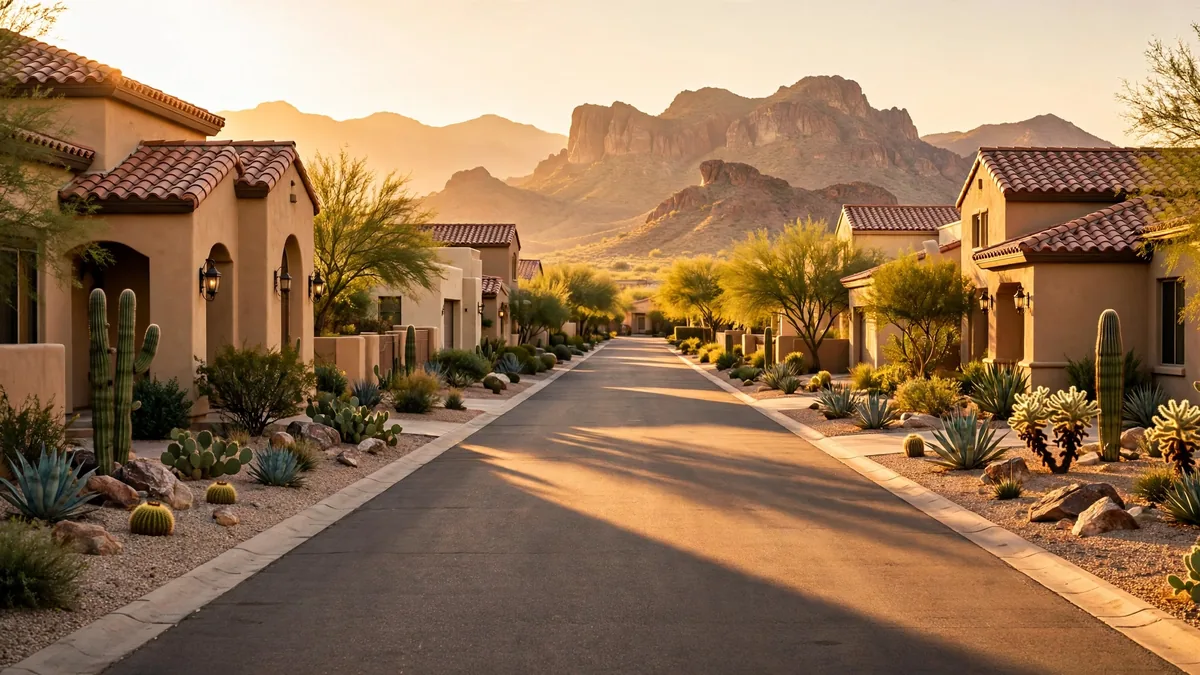
Desert Ridge has a roofing story no other Phoenix neighborhood can match: a whole community, built in one era, with one roof type, hitting one maintenance milestone at the same time. Understanding that story is worth thousands of dollars to anyone who owns or is buying a home here.
Desert Ridge: the neighborhood facts that drive the roofing
The Desert Ridge master plan covers 5,700 acres in northeast Phoenix, anchored by the JW Marriott Desert Ridge resort, Desert Ridge Marketplace and the Mayo Clinic campus. The community association counts roughly 6,178 homes and 18,000 residents across ZIP codes 85050 and 85054. First homes were occupied in 1995, with build-out continuing through the 2000s and 2010s. Nearly all of it is tile-roofed — the Southwest desert architecture the community was designed around — and the median home sale price was around $678,000 in mid-2026 market data. That combination — valuable homes, tile roofs, 1995–2010 construction — creates the underlayment wave explained in the FAQ above and detailed in our underlayment lifespan guide.
Featured placement
Your company here — Desert Ridge & North Phoenix. This slot is reserved for an ROC-licensed roofing company serving the Desert Ridge area. Paid placement, clearly labeled, factual descriptors only. How placement works →
Roofing companies serving Desert Ridge (factual, not ranked)
Canyon State Roofing
- Phoenix-based; tile roofing a specialty
- Tile repair, replacement and underlayment work across the Valley including the northeast arc
Lyons Roofing
- In business since 1993 (per the company); Phoenix service area includes Desert Ridge
- Tile, shingle, flat and foam systems; free inspections; 24/7 emergency service
- Licensed with the Arizona Registrar of Contractors
Scott Roofing
- Phoenix-based; residential roofing including tile systems
- Serves north Phoenix communities
Stapleton Roofing
- Phoenix-area residential roofer; tile replacement and repair
- Family-owned Valley company serving the north Phoenix area
See the full metro shortlist on our best roofing companies in Phoenix page. Descriptors are compiled from companies’ own published information; verify ROC license status at roc.az.gov before hiring.
The Desert Ridge roof playbook
If you own here and the roof is original: you are in the window. Get the underlayment assessed before monsoon season (the pre-monsoon checklist is written for exactly your roof), budget the lift-and-relay in the $2,000–$5,500 band, and choose the premium membrane — Desert Ridge home values make the 40-year spec the obvious economics.
If you’re selling: a documented underlayment replacement is one of the strongest roof stories a Desert Ridge listing can carry — it converts the buyer’s biggest unknown into a dated, warranted asset. Keep the contract, membrane product name and warranty in the disclosure packet.
If you’re buying: presume the membrane question is open until paperwork proves otherwise, price it into your offer, and put a specialist inspection in your contingency plan (numbers in our inspection cost guide).
For every job: three same-scope bids, ROC verification, named membrane in writing, and the 12 hiring questions. The community’s scale works in your favor — roofers compete hard for Desert Ridge work, and your street’s recent job history is a reference network no other neighborhood has.
A note on Desert Ridge tile profiles
The community’s builders used a handful of concrete tile profiles and desert-toned color blends, many still in production and some discontinued. This matters twice in your roof’s life: at repair time, when matching broken tile depends on salvage supply for discontinued profiles, and at underlayment time, when the roofer re-laying your field needs enough matching spares to cover the 5–10% breakage a lift-and-relay typically produces. Practical moves: ask any roofer bidding your job which profile your roof wears and where their matching stock comes from; keep any spare tile from past repairs stacked in the garage rather than discarding it; and if a previous owner left attic stock, count it before the job — it’s worth real money in matching quality. A roofer fluent in the community’s profiles will name yours from the driveway.
Permits, documents and the resale file in Desert Ridge
Underlayment replacement and re-roofing in Desert Ridge are City of Phoenix permitted work (the community sits within Phoenix, not Scottsdale, despite the shared border and the Scottsdale Road addresses nearby). Your roofer pulls the permit; the closed permit record becomes part of your home’s file. Keep with it: the contract with the membrane product named, the warranty documents, before/during/after photos (any good roofer shoots these anyway — ask for copies), and any community-association correspondence if a visible element changed. In a community where the median sale price runs around $678,000, that folder is not bureaucracy — it’s the difference between a buyer’s roofer saying “the roof question is answered” and saying “budget for the unknown,” which are two very different offers.
How this local list was built
The Desert Ridge list is a local cut of the same factual method used for the wider Phoenix shortlist, narrowed by geography and by roof type. A company appears here only if its own published information shows it serves the Desert Ridge area of northeast Phoenix — the 5,700-acre master-planned community in ZIP codes 85050 and 85054, with roughly 6,200 homes — and if it works on tile roofing, the system that covers nearly all of the community. As on the Phoenix page, each entry is limited to sourceable descriptors: where the company is based or which area it serves, which roof types it handles, and a specialty or founding year only where the company itself publishes one.
That narrow filter is intentional. Desert Ridge does not need a general list of every roofer in the Valley; it needs the subset a homeowner can plausibly interview for tile work here. Inclusion is not paid, entries are not ranked, and there are no ratings or review counts, for the same reason as on the metro page: those figures cannot be verified the way a license, a service area, or a roof type can. The one Featured Placement slot on this page is paid advertising, visibly labeled as such, reserved for an ROC-licensed company serving the area, and it does not affect who appears in the standard list. A company that is not listed here may still serve Desert Ridge well — treat this page as a starting set to interview, and vet any candidate, listed or not, the same way.
Vetting for Desert Ridge’s tile-roof housing stock
Vetting in Desert Ridge starts with the calendar, not the company. The community’s first homes were occupied in 1995, with build-out continuing through the 2000s, and nearly all of that 1995–2010 housing stock was built with tile over felt underlayment. Felt underlayment in the desert has a 20–25-year lifespan, which means original roofs from that era are reaching the end of the membrane’s life together — the underlayment wall described on this page. The tile itself usually has decades of life left; it is the hidden layer underneath that expires. So the first vetting question for any Desert Ridge home is factual: what is the build year, and is there paperwork showing the underlayment has already been replaced? If there is no record, presume the question is still open.
From there, run the standard Arizona checks with a tile-specific emphasis. Ask for the company’s ROC number and verify it yourself at roc.az.gov: license active, classification covering residential roofing, and legal name matching the name on the bid. Then ask for documents in writing before any deposit: a bid that names the exact underlayment product to be installed, states whether tear-off, disposal, flashing, and the City of Phoenix permit are included, and gives a per-sheet price for deck repair if damaged decking is found. Ask for both the material warranty and the workmanship warranty in writing, in years, in the contract. Because most Desert Ridge jobs do not change anything visible — the existing tile goes back on — also confirm with the community association before any change that would alter roof material, profile, or color, and keep any approval with your roof records.
How to interview roofers for a lift-and-relay job
The job most Desert Ridge roofs need next is underlayment replacement, often called lift and relay: the tile is lifted, the old underlayment is removed, a new membrane is installed, and the tile is relaid. Interview for that specific job, not for roofing in general. Ask each candidate how the work is sequenced, what membrane they install as their standard for this job — by product name, to be written into the bid — and how they handle the breakage a lift-and-relay normally produces when tile is handled and relaid. Ask which tile profile your roof wears and where matching replacement tile would come from if spares are needed, especially if your profile is one the community’s builders used that may no longer be in current production. A roofer experienced with this work in this community will answer in specifics; vague answers on membrane or tile supply are information in themselves.
Collect three bids built on the same written scope — same membrane spec to compare, same flashing treatment, same deck-repair pricing, permit included — and compare them line by line rather than on total price alone. For budgeting, this site publishes the typical band for the job at $2,000–$5,500, with an average around $3,400, and notes that Desert Ridge homes run larger than the Phoenix median, so planning toward the middle or upper part of that band is reasonable. Keep the signed contract, the named membrane product, the warranty documents, and before, during, and after photos together in your resale file: in a community built in one era, that paperwork is what proves to the next buyer that the underlayment question has already been answered.
How we publish costs: every figure on this page is a range compiled from named third-party sources credited in the text (Angi, HomeAdvisor, the National Weather Service, the Arizona Registrar of Contractors and roofing-material references) — never a quote. Roofing prices move with material costs, roof size and access; the only number that matters for your house is a written bid from a licensed roofer.
Frequently asked questions
Why is everyone in Desert Ridge suddenly getting roof work done?
Cohort math. The community was built between 1995 and the 2010s, almost all tile over felt underlayment with a 20–25-year desert lifespan. Entire streets are reaching membrane end-of-life within a few years of each other. The tile on those roofs is generally fine for decades more — it's the hidden underlayment expiring on schedule, which is why the neighborhood job is lift-and-relay, not replacement.
Does the Desert Ridge HOA regulate roof work?
Desert Ridge is a master-planned community with design guidelines administered through its community association, and roof material, profile and color are visible-architecture items. Underlayment replacement that relays your existing tile usually doesn't change anything visible; a material or color change would need review. Confirm with the association before any visible change, and keep approval letters with your roof records.
How much does the typical Desert Ridge roof job cost?
For the community's signature job — full underlayment replacement on a tile roof — Angi's tile average is about $3,400, with typical jobs at $2,000–$5,500 depending on roof size and membrane choice. Desert Ridge homes run larger than the Phoenix median, so budget mid-to-upper in that band, more for premium modified-bitumen membrane. Full tile replacement ($10–$18/sq ft) is rarely needed here yet.
Which roofers serve Desert Ridge?
Most established Phoenix tile specialists cover the northeast Valley, including the companies on our Phoenix shortlist (several are north-Phoenix based). The vetting that matters here is tile-specific: salvage access for the community's common profiles, a named high-temp membrane spec, and experience with lift-and-relay at community scale. Verify ROC licensing and ask the tile questions in our hiring guide.
I'm buying a home in Desert Ridge. What should I check on the roof?
Build year first — that dates the underlayment. Any original roof from 1995–2008 should be presumed to need underlayment replacement now or within a few years unless records show it done; budget ≈ $3,400–$5,500 accordingly and get a specialist inspection (Phoenix average ≈ $365) rather than relying on the general home inspection, which doesn't lift tile. Ask the seller for roof paperwork: dates, membrane product, warranties.