Roof Inspection Cost in Phoenix: What’s Fair in 2026
A roof inspection is the cheapest information in Phoenix homeownership — and the product varies so much that the price only makes sense once you know which of the three kinds you're buying.
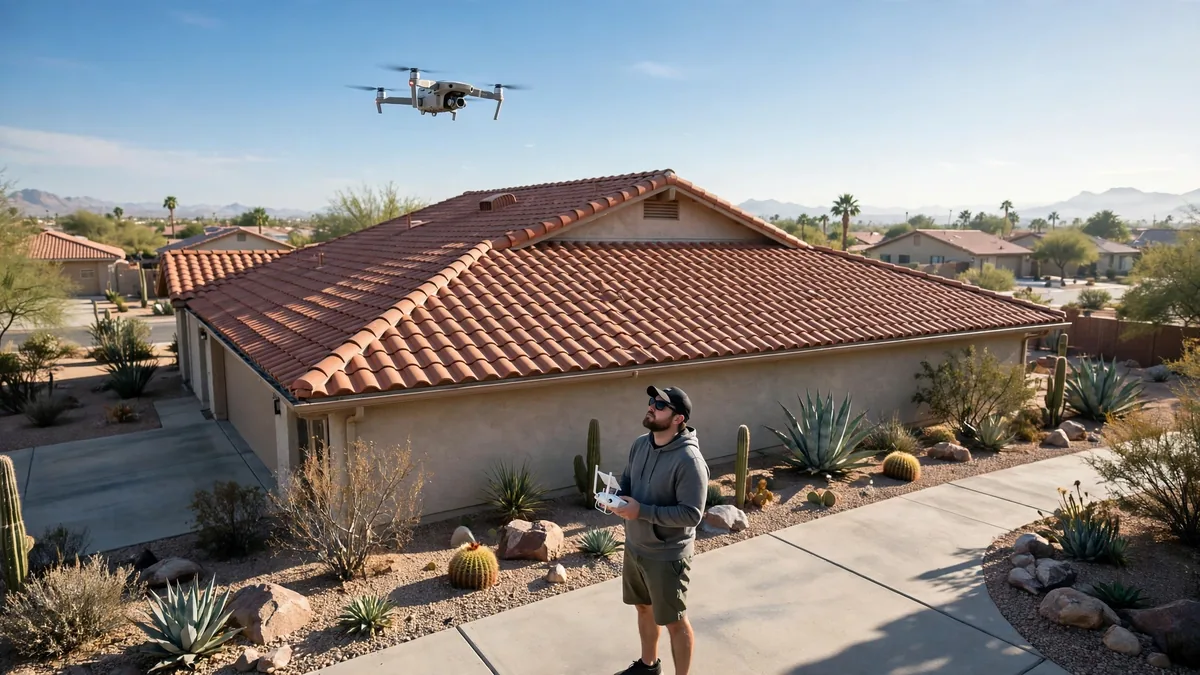
A roof inspection is the cheapest information in Phoenix homeownership — and the product varies so much that the price only makes sense once you know which of the three kinds you’re buying.
What does a roof inspection cost in Phoenix?
| Inspection type | Typical cost | What you actually get |
|---|---|---|
| Roofer’s free inspection | $0 | Walkthrough + repair/replacement quote; a sales visit |
| Paid professional inspection | $150–$600; avg ≈ $365 (Angi) | Neutral written report, photos, life estimates |
| Roof certification (add-on) | ≈ $75–$200 | Written leak-free/serviceability statement for a transaction |
| Attic-only inspection | ≈ $200–$500 (published ranges) | Interior evidence: stains, deck condition, ventilation |
| Drone inspection | Often bundled | Imagery for fragile/steep roofs; no hands-on checks |
Free vs paid: choosing honestly
Free inspections are the Valley’s default, and for a known problem — a leak, storm damage, a stain — they’re the efficient route: the roofer finds the cause and quotes the fix (ranges in our repair cost guide). The failure mode is subtler: a free inspection asked to answer “is my roof okay?” has a structural bias toward “no, and here’s the $14,000 reason.” Our monsoon repair guide documents the storm-week version of this.
Pay the ~$365 when the decision is expensive: before buying a home (your inspector’s general pass doesn’t walk roofs), before green-lighting a five-figure replacement, when two roofers have told you opposite stories, or when you need documentation for insurance or a sale. A neutral report is a negotiating instrument in all four situations.
What should the report contain?
Refuse anything less than: dated photos of every slope and detail flagged; condition notes by component (surface, flashing, ridge, drainage, penetrations); on tile roofs, an underlayment assessment (the deciding layer — see how often it needs replacing); on foam, coating condition (see foam costs); an attic section; estimated remaining life as a range with reasoning; and a prioritized fix list separating “now,” “this year” and “plan for it.” That document is what the fee buys — if it isn’t in writing, it didn’t happen.
The Phoenix inspection calendar
Two natural anchor points: pre-monsoon (May–early June) — our checklist version covers the DIY pass, and a professional walk belongs here on older roofs — and post-storm, when a documented check builds your insurance file (the insurance guide explains what adjusters do with it). Add transaction inspections at purchase/sale and a professional look every 2–3 years on any roof past mid-life, and you have a schedule where no Phoenix roof failure should ever surprise you — the failures here are famously visible years in advance to anyone who climbs up and looks.
Before booking, ask the inspector three things: Do you walk the roof or drone it? Is the report written with photos? Do you also sell the repairs (and if so, is the inspection fee credited)? The answers tell you which product you’re buying — then the price, free or $365, can be judged fairly. For the questions to ask when the inspection turns into a bid, use our roofer hiring guide.
What a drone inspection can and cannot tell you
Drone inspections have become the default offer in Phoenix because they’re fast and safe on fragile tile — nobody breaks tiles walking a roof that was never walked. Imagery is genuinely good at: breakage counts, slipped tiles, ridge condition, debris mapping, coating discoloration on foam, and storm-damage documentation for insurance. It is genuinely bad at the layer that decides most Phoenix roofs: the underlayment. A drone cannot feel brittle felt at an eave, test shingle flexibility, probe a foam blister or check attic-side deck staining. Treat drone reports as excellent surface surveys that must be paired with at least eave-level hands-on checks on any tile roof over 15 years old — and be wary of a drone-only report that pronounces a 22-year-old membrane “fine.”
How a roof inspection differs from a home inspection
In a purchase, the general home inspection covers the roof as one of dozens of systems — visually, usually from the ground or a ladder, with language like “roof appears serviceable; recommend specialist evaluation.” That sentence is the tell: the generalist is explicitly deferring the questions that matter in Phoenix (membrane condition, slope-by-slope remaining life, coating thickness on foam). The specialist inspection is the deferred evaluation. On a 20+ year tile home or 12+ year shingle home, skipping it to save $365 while accepting a five-figure unknown is the most expensive thrift in the transaction.
What happens during a paid inspection, step by step
A decision-grade inspection follows a sequence, and knowing it lets you judge whether the fee — anywhere in the $150–$600 range, averaging about $365 (Angi) — bought the full product. It usually starts inside, in the attic, before anyone climbs: the inspector reads the roof’s history from below, looking for stain patterns on the deck, daylight at penetrations, and signs that a past leak was repaired or merely painted over. Attic evidence also dates problems — an old, dry, dusty stain tells a different story than a fresh one — which matters when a seller says a leak was “fixed years ago.”
On the roof, the walk proceeds by system rather than by slope: surface material first (tile breakage and erosion, shingle granule loss and curling, foam coating condition), then the details where Phoenix roofs actually fail — flashing at walls and penetrations, valleys, ridge, and drainage paths. On tile roofs over roughly 15 years old, expect the inspector to check the underlayment where it can be seen at eaves and lifted edges; that membrane, not the tile, sets the roof’s remaining life, as the underlayment replacement guide explains. The visit closes with the inspector walking you through the photos on the spot, so the written report that follows confirms a conversation you have already had rather than surprising you with one.
How to use the report once you have it
A neutral report earns its cost in the four to six weeks after it arrives, if you work it deliberately. Use the prioritized fix list as your bid document: send the same findings to two or three licensed roofers and ask each to price the report’s “now” items, which forces competing quotes onto identical scope instead of letting each bidder redefine the job. Where a roofer disagrees with the report, ask them to document the disagreement with their own photos — a genuine second opinion improves the file; a verbal dismissal does not.
In a purchase, the report is a negotiating instrument with a deadline, so sequence it early in the inspection period rather than at the end, leaving time to price the findings before you respond to the seller. In an insurance context, file the report with the dated photos and keep every later repair invoice with it; together they establish the roof’s condition before any storm, which is exactly the baseline an adjuster looks for after one — the monsoon damage insurance guide explains how that documentation is used. And if the report sorts your roof into “end-of-life planning,” treat that as a budgeting gift: you now have the lead time to gather replacement bids in the dry season instead of buying in a panic after the first interior stain. The signs you need a new roof guide helps you sanity-check that verdict against what you can see yourself.
Inspection red flags: when the report itself is the problem
Some inspections should be discounted on delivery. Be wary of a report with no attic section on a house where attic access exists, a remaining-life figure stated as a single exact year with no reasoning behind it, or photos that show only wide roof views and none of the flashing and penetration details where failures start. The mirror-image problem is a “free inspection” document that is really a replacement proposal with photos attached: every finding points to one conclusion, the inspector’s own company is the only recommended remedy, and no “monitor” or “maintenance due” category exists anywhere in it. Real roofs almost always contain a mix of sound, aging, and failed components; a report with only one verdict is selling, not inspecting. When you get one, the fix is cheap relative to the decision at stake — commission the paid neutral version and let the two documents argue with each other.
How we publish costs: every figure on this page is a range compiled from named third-party sources credited in the text (Angi, HomeAdvisor, the National Weather Service, the Arizona Registrar of Contractors and roofing-material references) — never a quote. Roofing prices move with material costs, roof size and access; the only number that matters for your house is a written bid from a licensed roofer.
Frequently asked questions
Are free roof inspections in Phoenix legit?
Legit but not neutral. Reputable roofers offer free inspections hoping to earn repair or replacement work; the inspection itself is usually competent, but the incentive gradient points toward finding billable problems. Use free inspections for quotes on work you already know you need. For a decision-grade opinion — should I replace this roof, is this 20-year underlayment done — a paid inspection from an inspector or a roofer you're paying only for the report is the cleaner instrument.
What does a professional roof inspection include?
A walked inspection of the full roof surface (tile/shingle/foam condition), flashing and penetrations, ridge and edge details, drainage, visible underlayment at edges on tile roofs, plus an attic check for stains, daylight and ventilation — delivered as a written report with photos and remaining-life estimates. Drone inspections substitute for the walk on fragile tile. If your $365 buys a verbal 'looks fine' from a ladder, you didn't get the product.
What is a roof certification and what does it cost?
A certification is a written statement — usually for a real-estate transaction — that the roof is leak-free and expected to remain serviceable for a stated period (often 2–5 years), sometimes backed by the certifying roofer's willingness to repair leaks in that window. Published pricing puts certifications around $75–$200 on top of inspection. Buyers and lenders in Phoenix transactions ask for them on older roofs; sellers should expect the ask on any 20+ year tile roof.
How often should a Phoenix roof be inspected?
Professionally every 2–3 years for roofs in mid-life, annually past 15 years (shingle) or once tile underlayment passes 18–20 years, and always: before monsoon season if it's been a while (our checklist covers the DIY version), after any major storm, and before buying or selling the home. Attic self-checks can be annual and free.
Will an inspection tell me how much life my roof has left?
A good one gives you a range and the evidence for it: underlayment condition at exposed edges, breakage counts, coating thickness on foam, granule loss on shingles. Be skeptical of false precision ('exactly 6 years left') — but a report that sorts your roof into 'sound,' 'maintenance due' or 'end-of-life planning' with photos is worth every dollar when the alternative is a five-figure guess.