How Long Does a Tile Roof Last in Arizona? The Catch
Ask a Phoenix roofer how long a tile roof lasts and you'll hear "fifty years." Ask what you'll actually spend on that roof across fifty years and the answer gets more interesting — because in Arizona, a tile roof is two roofs stacked together: a nearly permanent tile shell, and a hidden waterproof layer underneath it with a much shorter clock.
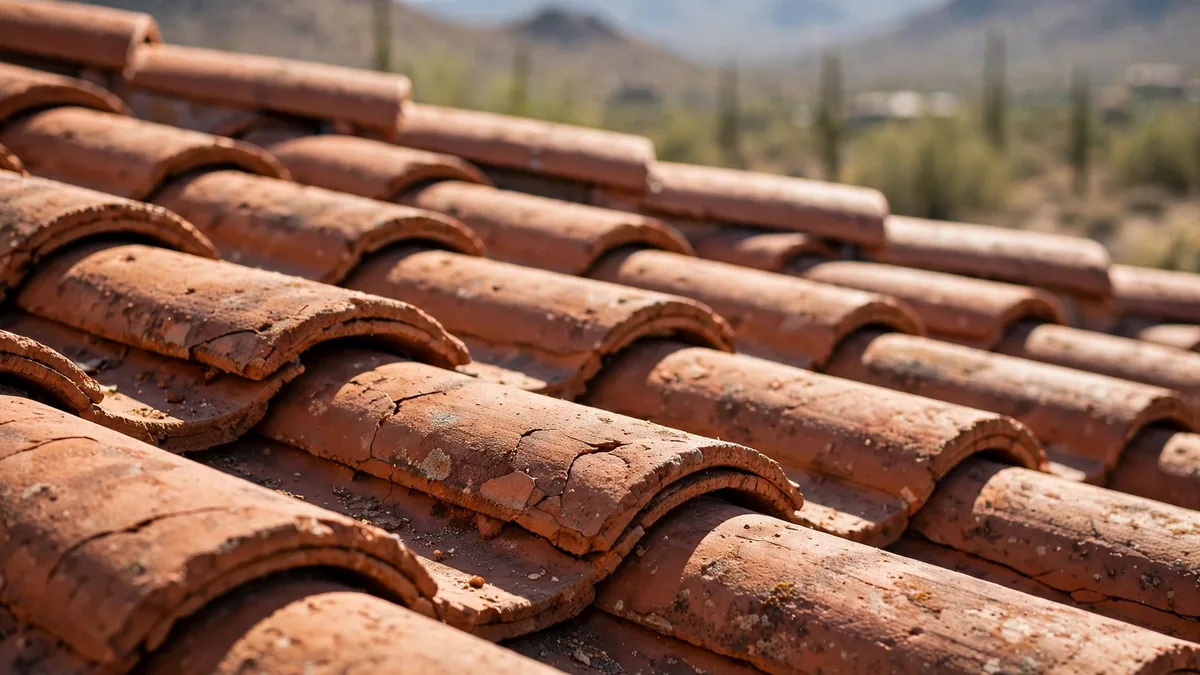
Ask a Phoenix roofer how long a tile roof lasts and you’ll hear “fifty years.” Ask what you’ll actually spend on that roof across fifty years and the answer gets more interesting — because in Arizona, a tile roof is two roofs stacked together: a nearly permanent tile shell, and a hidden waterproof layer underneath it with a much shorter clock.
What is the actual lifespan of tile in Arizona?
| Tile type | Typical Arizona lifespan | What usually ends it |
|---|---|---|
| Concrete tile | 50+ years | Impact breakage, surface erosion — rarely age alone |
| Clay tile | 50–75 years (quality clay can exceed this) | Breakage, freeze-thaw in rare cold snaps |
| The underlayment beneath either | 20–25 years (felt); up to 30–40 for premium synthetics/modified bitumen | Heat embrittlement — it dries out and cracks |
| Flashing, mortar, fasteners | 20–40 years depending on material | Corrosion, mortar cracking from thermal cycling |
Those tile figures match what manufacturers and industry references publish nationally — tile is one of the few materials whose Arizona lifespan is close to its brochure lifespan, because tile doesn’t care about UV. What Arizona changes is everything under the tile.
Why doesn’t the Arizona sun kill tile like it kills shingles?
Asphalt shingles are petroleum products: UV and heat drive out the oils that keep them flexible, which is why a shingle roof rated 25 years nationally often gives 15–20 in Phoenix. Tile is fired clay or molded concrete — there is nothing in it for the sun to evaporate. A Phoenix roof surface can pass 160°F on a July afternoon, and the tile takes it the way a brick patio does: it just gets hot.
Tile also creates its own small mercy. Tiles sit on battens or directly on the deck with an air channel beneath them, and that ventilation gap keeps some heat off the roof deck — one reason tile roofs are associated with lower attic temperatures than a dark shingle field baking in direct contact.
So what is the catch?
The catch is that tile is a watershed system, not a waterproof one. Tiles overlap and shed most rain, but wind-driven monsoon rain, cracked tiles and debris dams all push some water under the tile layer. The thing that actually keeps that water out of your house is the underlayment — felt or synthetic membrane nailed to the deck. And underlayment is an asphalt or polymer product, aging in a 160°F oven, flexing through daily thermal cycles from a 75°F dawn to a 115°F afternoon.
After 20–25 years of that, felt underlayment turns brittle and cracks along the fastener lines and laps. The tiles above it can look perfect from the street. This is the single most common cause of “mystery leaks” in Phoenix tile homes, and it is why we built a whole guide around it: what underlayment replacement costs and how often it needs doing.
How long will your specific roof last?
Three things move your roof’s real lifespan more than the material label:
- The underlayment spec from day one. A roof built with two layers of 30# felt or a high-temperature synthetic starts with a longer hidden clock than one built with a single layer of 15# felt — which is why two identical-looking 2003 tile roofs in the same subdivision can be a decade apart in condition.
- Foot traffic and repairs. Tile breaks under careless feet. Every AC service, holiday-light install and satellite visit that cracks tiles without replacing them opens the underlayment to direct sun and water, and sun-exposed underlayment fails in a few seasons, not decades.
- Debris and birds. Pigeon nesting under tile edges and debris packed into valleys hold moisture against the membrane and create the dams that push monsoon water sideways under the tile. Clean valleys age dramatically slower.
When does “50-year tile” stop being true?
If the underlayment fails and leaks go unaddressed, water rots the roof deck, and now the job is no longer a membrane swap — decking sections get replaced too, and the bill climbs toward full-replacement territory. The tile was never the problem; the system around it was. Read the early warnings on our signs you need a new roof page — on a tile roof, the signs live at the edges, in the valleys and in the attic, not in the tile field itself.
The budget version of the answer
If you own or are buying a Phoenix tile home, plan like this: the tile is a lifetime material; the underlayment is a 20–25-year consumable that costs roughly $3,400 on average (Angi’s figure for tile underlayment replacement) when its turn comes; and small repairs along the way run a few hundred dollars at a time. Total that honestly and tile is still usually the cheapest 50-year roof you can own in the desert — just not a fit-and-forget one.
What the Valley’s oldest tile roofs teach
Phoenix’s oldest surviving tile roofs — on historic homes in neighborhoods like Willo and Encanto, and scattered adobe and ranch properties — share a maintenance biography rather than a material secret: membranes renewed on schedule, broken tiles replaced in the season they broke, valleys kept clean, and owners who treated the tile as permanent and everything beneath it as scheduled. None of them ran 60 years on neglect. The lesson scales down to a Desert Ridge production home perfectly: the tile on your roof is capable of outliving your mortgage and possibly you; the system under it will deliver exactly the lifespan its maintenance buys. Fifty-year tile is not a purchase. It’s a practice.
Buying a home with a tile roof? Do the age math first
The buyer’s version of this whole page fits on an index card: (tile age) is marketing; (underlayment age) is money. A listing that says “tile roof!” on a 2003 build with no re-roof records is offering you a roof whose waterproofing is at or past its date — budget the lift-and-relay (average ≈ $3,400, Angi) into your offer, and get the specialist inspection that lifts a tile and reads the membrane (average ≈ $365, inspection guide). Conversely, a 2003 home with a documented 2022 underlayment replacement on a premium membrane is offering you 30+ years of not thinking about the roof — worth a premium, and provable in the seller’s paperwork. Either way, the tile’s shine is the least informative thing about the roof.
What ages tile itself, even in the desert?
Tile is highly durable, not indestructible. Concrete tile gradually loses surface finish under years of UV and wind-blown grit, which changes its appearance and can make individual tiles more porous over very long periods. Clay tile holds its color differently because the color runs through the fired material, but it can still chip at edges and break under impact or careless foot traffic.
In practice, a tile field rarely fails all at once. Individual tiles crack, slip, or break over decades and are replaced one at a time from attic stock or salvage. The field reaches the end of its useful life when breakage becomes widespread, the profile can no longer be matched, or so many tiles have eroded or been replaced that relaying them over new underlayment no longer makes economic sense. That point — not a birthday — is when a 50-year material becomes a replacement project.
How should you plan the second underlayment cycle?
If the first replacement is done at around year 20 to 25, the second decision point depends entirely on what was installed. A like-for-like felt replacement starts the same 20–25-year clock again. A premium membrane rated for 30–40 years pushes the next cycle far enough out that many owners will never buy it, and the tile decision and the underlayment decision may arrive together next time.
That is why the product name and install date belong with the house papers. Ten or twenty years later, no one can judge the remaining life from the tile’s appearance alone. The record of which membrane went down, and when, is what turns the second cycle from a guess into a planned date. See how often to replace roof underlayment for the interval by membrane type and tile roof underlayment replacement cost for how the current choices set that next date.
How we publish costs: every figure on this page is a range compiled from named third-party sources credited in the text (Angi, HomeAdvisor, the National Weather Service, the Arizona Registrar of Contractors and roofing-material references) — never a quote. Roofing prices move with material costs, roof size and access; the only number that matters for your house is a written bid from a licensed roofer.
Frequently asked questions
Does the Arizona heat shorten a tile roof's life?
It shortens the underlayment's life far more than the tile's. Tile shrugs off UV and 160°F+ surface temperatures for decades, but heat bakes the felt or synthetic membrane underneath until it turns brittle — which is why Arizona tile roofs are planned around a 20–25 year underlayment cycle, not the tile's 50-year one.
Which lasts longer in Arizona, clay or concrete tile?
Clay, on paper: 50–75 years is common and well-made clay can go longer. Concrete tile is rated 50+ years and is heavier and cheaper. In practice both outlast the underlayment, the flashing and usually the homeowner — the practical difference is cost and weight, not which one you will be alive to replace.
How do I know how old my tile roof's underlayment is?
Start with the home's build year or the last re-roof permit — in most Phoenix subdivisions the underlayment dates to construction unless records show a lift-and-relay job. Homes built between the mid-1990s and mid-2000s (including most of Desert Ridge) are in the failure window right now if the underlayment has never been replaced.
Can a tile roof last 100 years in Phoenix?
Individual clay tiles can. A tile *roof system* cannot do it untouched: underlayment (20–25 years), metal flashing, mortar and fasteners all age faster than the tile. Plan on one underlayment replacement per 20–25 years and periodic broken-tile and flashing repairs, and the tile field itself can genuinely serve for generations.
Does a tile roof need maintenance to reach 50 years?
Yes, light but real: replace cracked or slipped tiles promptly, keep debris and bird nesting out of valleys and roof-to-wall joints, and have the roof walked every few years — especially before monsoon season. Neglected small failures let water reach the underlayment and deck, which is what turns a 50-year roof into a 30-year problem.