Roof Maintenance in Phoenix: A Heat & Monsoon Calendar
Desert roofs don't die of old age; they die of skipped appointments. Every expensive Phoenix roofing story — the $24,000 replacement that "came out of nowhere," the foam roof that failed at 12 — reduces to a $300 task or a $365 inspection that didn't happen in the right season. This calendar is the whole system.
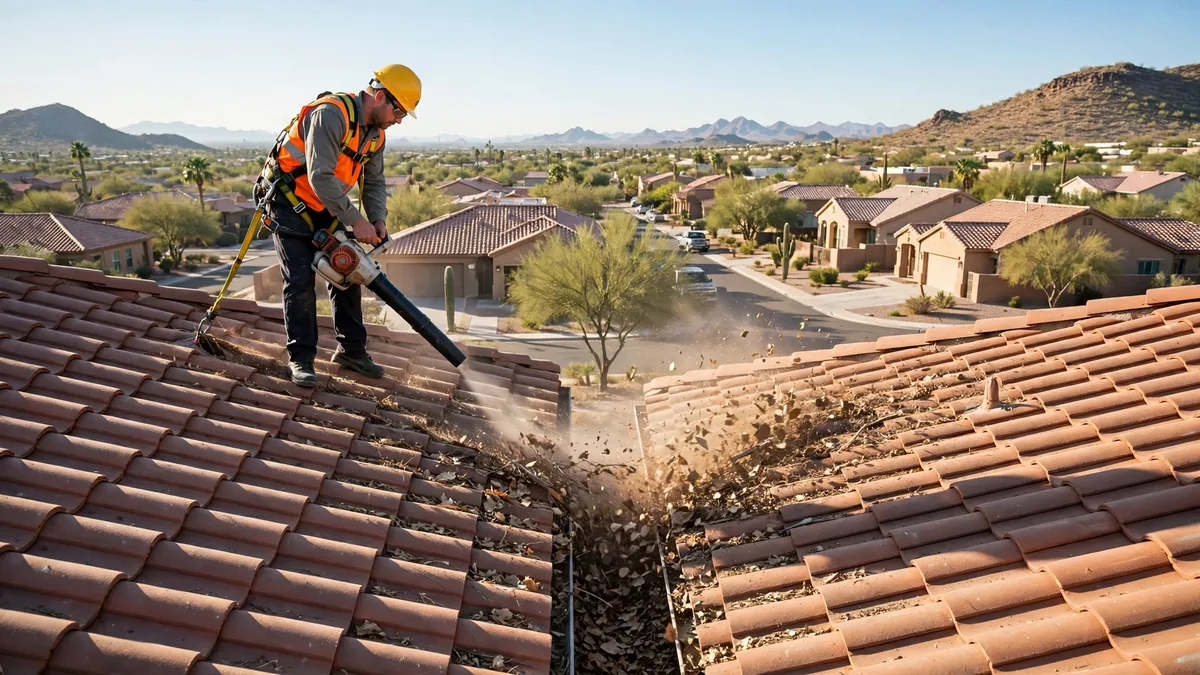
Desert roofs don’t die of old age; they die of skipped appointments. Every expensive Phoenix roofing story — the $24,000 replacement that “came out of nowhere,” the foam roof that failed at 12 — reduces to a $300 task or a $365 inspection that didn’t happen in the right season. This calendar is the whole system.
The Phoenix roof maintenance calendar
| When | Tasks | Why then |
|---|---|---|
| May (pre-monsoon) | The 10-point checklist: ridge, tiles, drainage, flashing, foam coating, attic | Season starts June 15 (NWS); roofers still bookable |
| After each big storm | Ground scan for fallen tiles/tabs, ceiling check, attic check in the morning | Damage documented fresh = insurance-grade evidence |
| October (post-monsoon) | Review storm season’s effects; fix small finds before winter rains | Second rain season tests what monsoon loosened |
| Winter (Dec–Feb) | The planned-capital window: underlayment jobs, recoats, replacements get scheduled | Cool, dry, roofer calendars open — best pricing leverage |
| Year-round | Keep debris off valleys; keep trees 6 ft clear; watch the attic after any rain | The free habits that prevent the common leaks |
The May and post-storm items expand fully in our pre-monsoon checklist and monsoon damage guide — this page is the frame they hang on.
Maintenance by roof type
Tile. Your tasks are surveillance and small swaps: broken tiles (replace within the season, not the year — every cracked tile suns the underlayment directly), ridge mortar condition, debris in valleys, and pigeon control at eaves. The capital rhythm is the underlayment interval: felt at 20–25 years, premium membranes later. Nothing to coat, seal or wash — tile maintenance is a ladder, a sharp eye and a roofer’s number for tile swaps.
Shingle. From year 10, monitor granule output in gutters (the aging meter), tab adhesion at edges, and any curling. Sealant-strip failures get hand-sealed; lifted rows get re-fastened before monsoon. When findings become field-wide, stop repairing and start the replacement plan — in Arizona that plan starts at year 15, not year 25.
Foam. The highest-discipline system: drains clear always, coating inspected twice a year, damage patched within weeks, and the recoat on a 5–10-year cycle that is treated as non-negotiable (the foam cost guide prices it). Foam owners who run this rhythm own the Valley’s cheapest long-life roofs; foam owners who don’t, own its most expensive failures.
Flat built-up/modified sections. Watch seams, keep drainage perfect, and have ponding areas evaluated — 48 hours of standing water after rain is the standard complaint that starts a professional conversation.
For Desert Ridge owners, that underlayment date is a neighborhood-wide one — most homes were built between 1995 and 2010 — so line up your inspection and roofer interviews early using the Desert Ridge companies guide rather than waiting for the rest of the street to book first.
The money logic of the calendar
Run the numbers once and the calendar sells itself. The preventive layer (DIY checks + small repairs + periodic inspections) averages a few hundred dollars a year. The failure layer it prevents — emergency repairs at storm premiums, deck rot from a season of ignored leaks, a recoat that became a re-foam, concessions at resale from an undocumented roof — prices in the thousands to tens of thousands (see the repair and replacement bands). Maintenance is not a virtue here; it’s arbitrage.
Setting up your system in one afternoon
Create the roof folder (install dates, membrane spec, recoat dates, warranties — the FAQ above lists it). Put the May and October passes on your calendar as recurring events. Photograph every slope from the same ground spots each pass — your own comparison set is better than memory. Line up your roofer before you need one: a licensed ROC-verified company that has already walked your roof in May is the number you want in August. Finding that company is the job of our hiring questions guide — ask them in the calm season, and the storm season becomes weather again.
Safety rules that are part of the calendar
Maintenance only counts if nobody gets hurt doing it. The non-negotiables: never walk a tile roof without training (hire the tile work — broken tiles are the cheap version of that lesson; falls are the other one); never go up in monsoon season around storms, on wet surfaces, or in midday summer heat, when Phoenix roof surfaces pass 160°F and heat illness arrives faster than the inspection finishes; attic checks happen in the early morning for the same reason; ladder work follows the boring rules — solid footing, three points of contact, someone home. Most of the calendar above is deliberately designed as ground, ladder-at-eave and attic work for exactly this reason, with the on-roof items reserved for the professionals your calendar already includes.
The other people on your roof
Your roof hosts a small workforce over the years — AC techs, solar installers, satellite and holiday-light crews, painters — and their foot traffic is a maintenance variable. Brief them: tile roofs need stepping on the lower third of tiles over support points (or walkway pads), foam roofs need soft shoes and no dragged equipment, and any damage gets reported, not hidden. Put a standing note with your service companies that roof damage from their visit is raised with you the same day. It sounds fussy for exactly one visit — the one where a cracked tile over the master bedroom goes unmentioned until July. Owners who treat the roof as shared infrastructure keep finding their repairs measured in single tiles instead of ceilings.
What should a professional maintenance visit actually include?
A professional visit earns its fee when it leaves you with findings you can act on, not a vague “roof looks fine.” Ask what will be checked before you book it. On tile, that means looking for cracked and slipped tiles, checking ridge caps and mortar, clearing or reporting debris in valleys and at roof-to-wall joints, and inspecting the underlayment visible at eaves and cutbacks — the edge that often tells the truth about the membrane’s age. On shingles, it means checking tab adhesion at edges, looking for curling and cracking, and noting granule loss rather than just counting missing pieces. On foam, it means walking the surface carefully, checking drains and scuppers, and photographing coating cracks, blisters, thin spots, and any exposed foam.
The visit should end with three things in writing: what was fixed on the spot, what should be monitored and rechecked on a stated date, and what is approaching a capital decision. Dated photos from the same slopes you photograph yourself make the next visit comparable instead of impressionistic. Keep the report with the contracts and warranty papers described in the warranty guide. If a visit produces only a large replacement proposal and no slope-by-slope findings, get a second inspection before treating that proposal as a diagnosis.
How does maintenance change as a Phoenix roof ages?
Treat age as a schedule, not a surprise. In the early years of any system, the work is mostly housekeeping: keep valleys and drainage clear, replace individual damaged pieces promptly, and confirm that later work by other trades did not crack tile, cut foam coating, or lift shingles. In the middle years, the checks get more specific. Shingles deserve closer attention to granules, edge adhesion, and brittleness as they move through their teens, because the Arizona expectation is 15–20 years, not the longer life quoted for milder climates. Foam owners should be tracking the recoat clock from the last coating date, on a 5–10-year cycle, rather than waiting for the coating to look exhausted.
The late-cycle years need a different decision. On a tile roof approaching 20–25 years on felt underlayment, maintenance stops being only about individual tiles and becomes planning for the lift-and-relay: get the membrane assessed, budget the job for a cool, dry window, and read how often underlayment is replaced before a leak chooses the timing for you. Do not keep paying for scattered repairs that a roofer can show are all tracing back to the same expiring layer. Equally, do not let age alone sell you a full replacement when the primary material is sound. The calendar’s job is to tell you which layer is aging, what evidence supports that judgment, and how much time you realistically have to schedule the work well — ideally before monsoon season opens on June 15 and Phoenix roof surfaces are spending their afternoons past 160°F.
How we publish costs: every figure on this page is a range compiled from named third-party sources credited in the text (Angi, HomeAdvisor, the National Weather Service, the Arizona Registrar of Contractors and roofing-material references) — never a quote. Roofing prices move with material costs, roof size and access; the only number that matters for your house is a written bid from a licensed roofer.
Frequently asked questions
How much does annual roof maintenance cost in Phoenix?
Mostly your time. The recurring paid items are small repairs as found (a few hundred dollars at a time), periodic professional inspections (average ≈ $365 when you use them), and the scheduled big items — foam recoats and tile underlayment — which are planned capital events, not surprises. Owners who run the calendar typically spend a few hundred dollars a year on average; owners who skip it meet the $5,000+ repair band eventually.
What maintenance does a tile roof need?
Replace broken or slipped tiles promptly, keep valleys and roof-to-wall joints free of debris and nesting, watch ridge mortar, and keep foot traffic off (or on proper paths when service techs visit). The core event is underlayment replacement at its interval. Tile itself needs no coating, sealing or painting — anyone selling you a tile 'rejuvenation coating' is selling cosmetics as structure.
What maintenance does a foam roof need?
Foam is the most maintenance-dependent roof in Phoenix: keep drains and scuppers clear, repair coating cuts and bird damage promptly, and recoat every 5–10 years before the coating fails — that's the appointment that decides whether the roof lives 25 years or dies at 12. Walk it (softly, in the cool morning) twice a year and photograph coating condition for your records.
Should I pressure-wash my tile roof?
No — pressure washing tile is a damage service dressed as cleaning: it erodes concrete tile surfaces, drives water under the tile field against the underlayment, and breaks tiles underfoot. If appearance is the issue, soft-wash methods exist; if drainage is the issue, hand-clearing valleys is the fix. Structural maintenance never involves a pressure washer.
What records should I keep for my roof?
A single folder: install/replacement contracts and dates, the underlayment product name, recoat dates and products (foam), every repair invoice with photos, inspection reports, and warranty documents. This folder is worth real money — it's evidence for insurance claims, it's what a buyer's roofer asks for, and it's how the next owner inherits your maintenance instead of your mystery.