Roof Underlayment Replacement Cost in Phoenix (2026 Guide)
If your Phoenix tile roof is somewhere between 18 and 30 years old and you've started seeing a leak — or a roofer has used the word "underlayment" — you are looking at the most common big roofing job in the Valley. Not a new roof. The job where the tile comes off, the dead waterproof layer under it gets replaced, and the same tile goes back on.
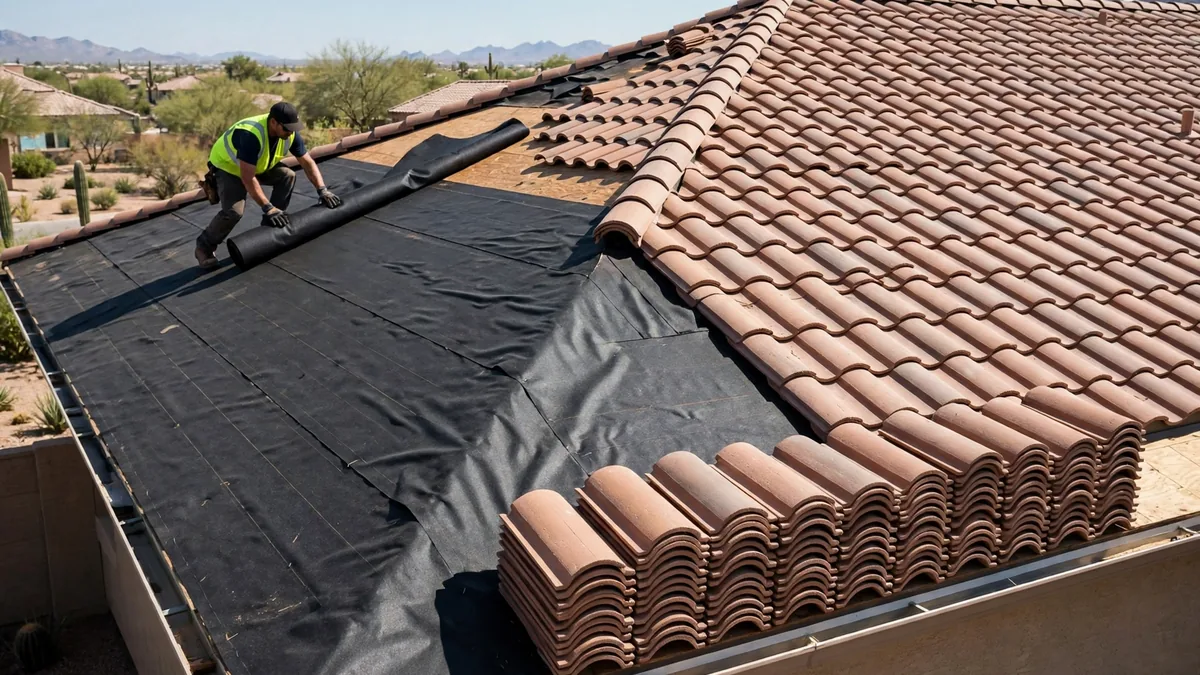
If your Phoenix tile roof is somewhere between 18 and 30 years old and you’ve started seeing a leak — or a roofer has used the word “underlayment” — you are looking at the most common big roofing job in the Valley. Not a new roof. The job where the tile comes off, the dead waterproof layer under it gets replaced, and the same tile goes back on.
What does underlayment replacement cost in Phoenix?
| Job scope | Typical Phoenix range | Notes |
|---|---|---|
| Full lift-and-relay, standard felt (one layer 30#) | $2,000–$4,000 | Most common bid on average-size homes |
| Full lift-and-relay, synthetic underlayment | $3,000–$5,000 | The value pick — longer life for modest upcharge |
| Full lift-and-relay, high-temp modified bitumen / double-layer | $4,000–$5,500+ | Premium spec; 30–40 year membrane life |
| Partial (one slope / one leak area) | $900–$2,200 | Makes sense when the rest of the membrane is young |
| Average tile underlayment job (Angi data) | ≈ $3,400 average | National benchmark for tile/synthetic jobs |
Angi’s underlayment cost data puts the average tile job at about $3,400 (its Phoenix-specific figure from our measurement is $3,409), and per-square-foot membrane costs run $0.75–$4.00 depending on material. The installed total is dominated by labor — lifting, stacking and relaying thousands of tiles without breaking them is slow, skilled work.
What exactly are you paying for?
A proper lift-and-relay bid should include, line by line:
- Tile removal and stacking — tiles come off in sections and are stacked on the roof or ground, with breakage sorted out.
- Tear-off of the old membrane down to the deck, and disposal.
- Deck inspection and repair — rotted or delaminated plywood sections replaced (usually priced per sheet if found).
- New underlayment — the membrane you’re choosing, ideally named by product and weight/type in the bid.
- New flashing and metal at valleys, walls, vents and penetrations, plus new battens if your system uses them.
- Tile relay — your tiles back on, with broken ones replaced from matched stock, and ridge/mortar work renewed.
If a bid is a single lump number with none of this broken out, you have no way to compare it against the next bid — which is usually the point. Ask for the breakdown.
What moves the price up or down?
- Roof size and pitch. More squares = more tiles to handle twice. Steep roofs slow everything.
- The membrane you choose. Felt is cheapest and shortest-lived; high-temperature products rated for tile in hot climates cost more per roll and outlast felt by 10–20 years. Since labor dominates the bid, upgrading the membrane is the cheapest longevity you’ll ever buy — see the material table in tile roof underlayment replacement cost.
- Tile breakage rate. Budget 5–10% replacement tiles on an older roof. If your tile profile is discontinued, matched salvage tile costs more — and a good roofer raises this before the job, not during it.
- What the deck looks like. Years of slow leaks can mean sheeting repairs that only become visible after tear-off. A fair bid prices this per sheet in advance.
Underlayment replacement vs full tile replacement
Full tile replacement in Phoenix runs roughly $10–$18 per square foot installed — on a typical home, well into five figures. Lift and relay reuses the tile (the expensive part) and typically lands at a third to a half of that. Replacement only wins when the tile itself is failing — badly eroded concrete tile, widespread breakage, or a discontinued profile with no salvage supply. Our tile roof replacement cost guide breaks that case down. For most 20-something tile roofs with sound tile, underlayment replacement is the correct job.
When should you do it — before or after it leaks?
Before, if you can. The membrane doesn’t send a warning letter; the first leak usually means the felt has been cracking for a few seasons, and every storm since has been wetting the deck. Homes built in the 1995–2005 build-out — Desert Ridge, most of north Phoenix, Chandler, Gilbert — are in the window now if the job has never been done. The timing logic is in how often to replace roof underlayment; the cheapest version of this job is the one scheduled in the dry months, at your pace, with three bids — not the emergency version in the second week of monsoon season.
How to get a bid you can trust
Get the membrane named in writing (product, weight, layers). Get breakage and deck-repair pricing in writing. Confirm the roofer’s Arizona ROC license at roc.az.gov, and confirm the bid includes permit and disposal. Our questions to ask a Phoenix roofer page turns this into a checklist you can read off over the phone — and the pre-monsoon inspection checklist helps you find out where your membrane stands before you spend anything.
Partial now or full roof once? The sequencing math
When two or three slopes are due and the rest have years left, owners face a real fork. Partial work sequences the spend (per-slope jobs in the $900–$2,200 band) but pays setup and tile-handling overhead repeatedly, risks tone mismatch where new salvage tile meets old field, and leaves the roof in “project mode” for years. Whole-roof lift-and-relay pays the overhead once, blends tile across slopes, renews every flashing at once, and — with a premium membrane — synchronizes the entire roof onto one 30–40-year clock, which is worth money in simplicity and at resale. The working rule: one slope due → partial; two or more slopes due within five years of each other → whole roof. An inspector’s slope map (how the mapping works) converts that rule into your roof’s actual answer.
What this job does to your home’s file
A completed underlayment replacement, properly documented, changes your home’s paperwork permanently: a closed City of Phoenix permit, a contract naming a membrane with a 30–40-year rating, a workmanship warranty in years, and photo records of deck condition. For buyers and insurers, that package answers the Phoenix question (“what’s under the tile, and how old is it?”) with documents instead of suspicions — the difference between a roof treated as an asset and one treated as a contingency in negotiation. File everything in the roof folder from our maintenance guide, and if you’re in Desert Ridge or another 1990s–2000s tile community, expect your documentation to be compared against neighbors who don’t have any.
How does scheduling change the same job?
The work itself does not change with the calendar, but the conditions around it do. A lift-and-relay scheduled in the dry months can be sequenced slope by slope with the roof dried in each night, tile stacked carefully, and time allowed to inspect the deck once the old membrane is off. The same job bought after a leak has been found often starts with mitigation, a tighter queue, and less room to compare membranes or salvage tile options.
That is also when hidden conditions cost the most. If tear-off reveals deck damage, a planned job lets you review photos and the per-sheet price already written into the bid before the repair proceeds. In an urgent job, that conversation happens with the roof open. Neither version changes the membrane you need — it changes how much control you keep over the decisions made around it.
What can go wrong if the relay is rushed?
Most problems are not dramatic failures. They are small shortcuts that shorten the new system’s life: old flashing reused against new membrane, broken tiles relaid in visible field areas instead of replaced, laps hurried on a hot afternoon, or salvage tile mixed without blending. Ask how breakage will be sorted, where replacement tiles will go, and whether flashing is new or reused — before the tile starts coming off.
How we publish costs: every figure on this page is a range compiled from named third-party sources credited in the text (Angi, HomeAdvisor, the National Weather Service, the Arizona Registrar of Contractors and roofing-material references) — never a quote. Roofing prices move with material costs, roof size and access; the only number that matters for your house is a written bid from a licensed roofer.
Frequently asked questions
Is underlayment replacement the same as a new roof?
No — and that's the point. A full tile replacement removes and discards the tile; an underlayment replacement (lift and relay) keeps your existing tile, replaces only the waterproof membrane, flashing and battens underneath, and relays the tile. It typically costs a third to a half of full tile replacement, because the most expensive material on the roof is reused.
How much does underlayment replacement cost per square foot?
Material costs run about $0.75–$4.00 per square foot depending on type (standard felt at the low end, high-temperature modified bitumen at the top), and the full installed job — tile removal, tear-off, new membrane, relaying — commonly totals about $4.20–$4.75 per square foot of roof area on regional contractor pricing. A 2,000 sq ft roof at that rate is $8,400–$9,500 at the high end with premium membrane, so membrane choice moves the bid more than anything else.
How long does a lift and relay job take?
Most single-family Phoenix homes take 2–4 days: a day to lift and stack tile and strip the old membrane, a day to install new underlayment and flashing, and a day or two to relay tile and replace breakage. Large, steep or heavily detailed roofs take longer. The house is weather-tight at the end of each day in a competent sequence.
Should I upgrade the underlayment or replace like-for-like?
Upgrade. The labor to lift and relay the tile is most of the bill either way, so the difference between basic felt (another 20 years) and a high-temp synthetic or modified bitumen (30–40 years) is a few hundred to about a thousand dollars for potentially double the service life. Our comparison is in the tile-specific underlayment guide.
Will insurance pay for underlayment replacement?
Almost never for wear and age — underlayment wearing out at 20–25 years is maintenance, and policies exclude it. Insurance enters the picture only when a covered event (a monsoon storm, a fallen tree) damages the roof; even then, the age-related condition underneath is usually on you. See our monsoon insurance guide for how storm claims actually treat older underlayment.