Tile Roof Replacement Cost in Phoenix (2026 Guide)
A leaking tile roof produces two very different quotes in Phoenix: one for around three to five thousand dollars, and one for twenty-five thousand. Both can be honest. This guide explains which job your roof actually needs — because the difference is the most expensive misunderstanding in Valley roofing.
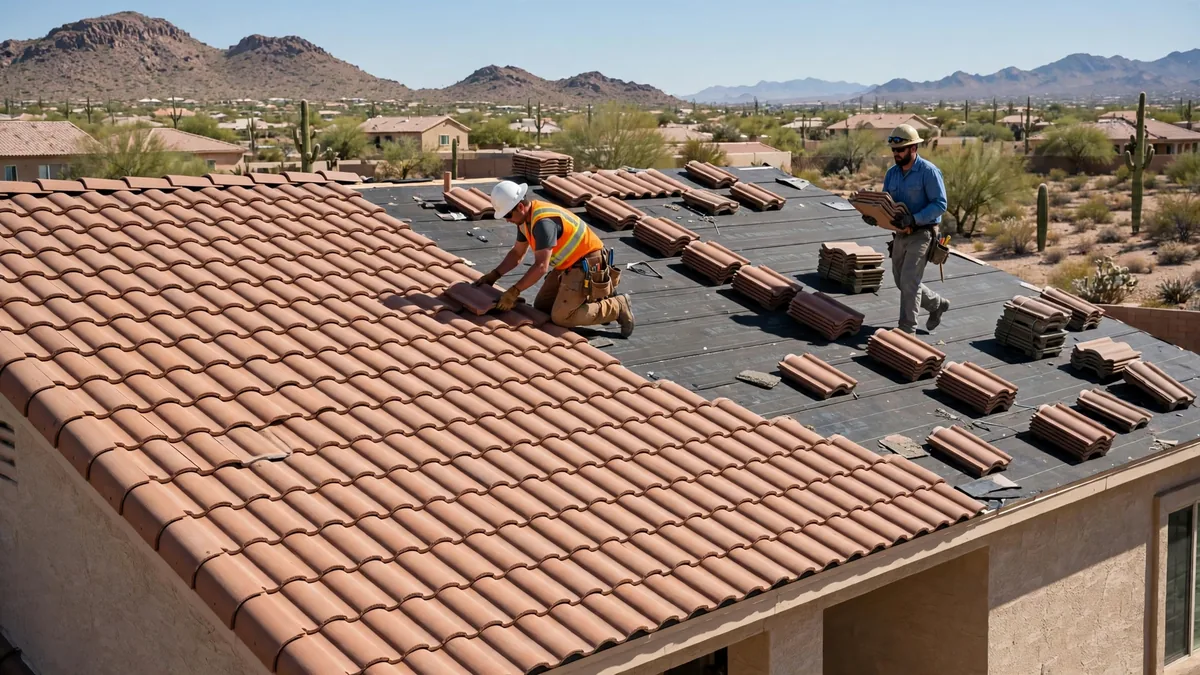
A leaking tile roof produces two very different quotes in Phoenix: one for around three to five thousand dollars, and one for twenty-five thousand. Both can be honest. This guide explains which job your roof actually needs — because the difference is the most expensive misunderstanding in Valley roofing.
What does full tile replacement cost in Phoenix?
| Scope | Per sq ft (installed) | Typical total range | Service life |
|---|---|---|---|
| Concrete tile, full replacement | $10–$15 | $18,000–$30,000 | 50+ years (tile); membrane 20–40 by spec |
| Clay tile, full replacement | $13–$18+ | $24,000–$35,000+ | 50–75 years (tile); membrane 20–40 by spec |
| Underlayment only (lift & relay) — for comparison | ≈ $4.20–$4.75 | $2,000–$5,500; avg ≈ $3,400 (Angi) | 20–40 years by membrane |
| Partial tile section replacement | Project-priced | Varies | Matches surrounding roof |
Installed tile pricing reflects what the job really is: tear off and dispose of several tons of old tile, install a new waterproofing system, then set thousands of individual new tiles by hand. Labor dominates — which is also why the underlayment-only alternative is so much cheaper: it performs the same surgery but reuses the tile you already own.
The question underneath every tile quote: is the tile itself done?
Tile fails in Phoenix in a short list of ways: concrete tile surfaces erode and go porous with age (the cement washes out, the tile absorbs water and gets heavier and weaker), profiles crack under repeated foot traffic, and some older lightweight tiles were simply never durable. A competent inspection answers this on the roof, not from the driveway: surface condition, breakage counts per slope, whether the profile is still made or salvageable.
If the field is sound, your problem lives underneath — the 20–25-year underlayment cycle we detail in how long tile roofs last — and underlayment replacement is the correct, manufacturer-consistent repair. Replacing sound tile to fix a membrane problem is how a $3,400 job becomes a $24,000 one.
What does a full replacement bid include?
- Tear-off and disposal of all tile and old underlayment (tile is heavy; disposal is a real line item).
- Deck inspection and repair, priced per sheet for anything rotted.
- New underlayment, named by product and spec — under new tile, insist on a high-temperature synthetic or modified bitumen from the table in our tile underlayment comparison; you will not see this layer again for decades.
- New flashing, valleys, battens and ridge system — all of it; reusing 25-year-old metal against a new system is sabotage by savings.
- New tile, with profile, manufacturer and color named, plus an attic stock of spares left with you (ask for it).
- Permit and warranties — material warranty from the manufacturer, workmanship warranty from the roofer in stated years.
Replacement math against the alternatives
Frame it over time. A full tile replacement at $24,000 with a premium membrane is a one-time 30–40-year waterproofing decision under a 50-year tile. Underlayment-only at ~$3,400–$5,000 with the same premium membrane buys the same 30–40 years of waterproofing and keeps your current tile — the tile was never the failing layer. Full replacement only pulls ahead when the tile’s own remaining life drops under the membrane’s: eroded, brittle or discontinued tile. In every other case, the Valley’s standard answer — the one the best roofers here give their own families — is lift and relay. (The master numbers sit in the Phoenix replacement cost guide.)
Clay, concrete, or change materials entirely?
Staying with tile preserves the home’s architecture and (in HOA communities like Desert Ridge) is often required by design guidelines — check before falling in love with shingles. Switching tile→shingle is technically possible but changes roof load, look and neighborhood compliance, and shingles in Arizona live 15–20 years against tile’s 50+. Switching to metal is the legitimate alternative some owners price out; it’s project-priced and architecturally selective. For nearly everyone, the real choice is binary: full tile replacement versus underlayment-only — and now you know the question that decides it.
Before signing either, run the bid through our questions to ask a Phoenix roofer, verify the ROC license, and read the warranty guide so the paperwork protects the next 30 years as well as the price does.
What happens to the old tile (and why it has value)
A full tile tear-off produces tons of material, and not all of it is waste. Sound removed tile — especially discontinued profiles — feeds the salvage market that repair roofers across the Valley draw on; it’s how a 2004 profile gets repaired in 2031. Ask your contractor how removed tile is handled: relay candidates on your own roof first (attic stock), saleable salvage, or straight disposal. On a clay roof especially, a contract silent on salvage quietly transfers that value. This is also a practical argument for the underlayment-only path: lift and relay never puts your tile into anyone else’s inventory in the first place.
Living through a tile replacement
Expect 3–5 days of real construction: tear-off day is loud and dusty (tile comes down chutes; the yard becomes a work zone), the house is dried-in each evening, and pets and patio furniture need a plan. Crews start at dawn in summer — your neighbors will know. Protect pool equipment and AC condensers from dust with the contractor (confirm whose job that is in the contract), and photograph the deck condition during the open phase for your records. The reward for the disruption is the longest reset in residential roofing: choose the premium membrane from the underlayment comparison and the roof you unveil is, functionally, a 40-year waterproofing system under a 50-year skin.
How a full tile replacement unfolds, day by day
Knowing the sequence helps you spot a bid that skips a step. A full replacement normally opens with tear-off: the old tile comes off slope by slope, the failed underlayment is stripped, and the exposed deck is inspected while it is still visible — this is the only moment in the roof’s life when deck rot can be found and priced honestly, so expect a per-sheet deck-repair line rather than a surprise. The new underlayment, flashing, and battens go down next, and the roof is dried in at the end of each working day so the house is never left open overnight. New tile is then set field by field, with valleys, penetrations, and the ridge system finished last.
In summer, crews start at dawn for a practical reason beyond comfort: by midday a dark deck and fresh membrane are being handled in the same 160°F-class surface heat that ages Phoenix roofs, and careful work — tile cuts, flashing bends, sealant joints — is morning work. If a contractor’s schedule has tile being set through the worst afternoon heat with no mention of staging or shade-side sequencing, that is worth a question before you sign, using the prompts in questions to ask a Phoenix roofer.
A worked comparison on the same house
Put the two scopes on one typical 2,200 sq ft roof area and the decision sharpens. Underlayment-only lands in the published $2,000–$5,500 band, with an average of about $3,400 (Angi). Full concrete tile replacement at $10–$15 per sq ft installed runs roughly $22,000–$33,000; full clay at $13–$18+ runs higher still. The gap is not profit — it is tons of new material, disposal of the old, and handling every tile twice.
So the comparison that matters is not price against price. It is remaining tile life against membrane life. If an inspection shows a sound field with modest breakage, the extra money in a full replacement buys new tile you did not need while the waterproofing result is the same membrane either way. If the field is eroded and porous across whole slopes, the calculus flips: relaying dying tile over a new 30–40-year membrane strands a good membrane under a failing skin. That is the one case where replacement is the economical job, and it is why the tile-condition verdict — documented with photos, slope by slope — should arrive before any contract does. If the verdict is sound tile, the full scope of the cheaper correct job is in the roof underlayment replacement cost guide.
How we publish costs: every figure on this page is a range compiled from named third-party sources credited in the text (Angi, HomeAdvisor, the National Weather Service, the Arizona Registrar of Contractors and roofing-material references) — never a quote. Roofing prices move with material costs, roof size and access; the only number that matters for your house is a written bid from a licensed roofer.
Frequently asked questions
How much does a new tile roof cost per square foot in Phoenix?
Installed full replacement typically runs $10–$18 per square foot, with concrete tile at the lower end and premium clay profiles and complex roofs above it. That figure bundles tear-off and disposal, new underlayment and flashing, new tile, and labor. Material-only tile prices are far lower — the handling labor is what makes tile replacement expensive.
Can I just replace the tiles and keep my old underlayment?
Almost never a good idea. New tile over old underlayment marries a 50-year material to a membrane that may have 3 years left — and when it fails, you'll pay the full lift-and-relay labor again on a nearly new roof. Any full tile replacement bid should include new underlayment and flashing by default; if it doesn't, the bid is not comparable to one that does.
When is full tile replacement actually the right call?
Four cases: the concrete tile is eroded and porous across the field (common past ~40 years on some profiles); breakage is so widespread that salvage matching is impractical; the tile profile is discontinued and damage keeps recurring; or you're changing the roof's look/material entirely (e.g., tile to a lighter system for structural reasons). Otherwise, leaks on a tile roof are almost always an underlayment, flashing or breakage problem — all cheaper than replacement.
Is clay tile worth the premium over concrete in Phoenix?
Clay costs more per square foot and is lighter per piece but more fragile underfoot; concrete is heavier, cheaper and extremely common in the Valley. Lifespans are comparable in practice (50+ concrete, 50–75 clay) because the underlayment cycle dominates both. Choose clay for the look and authenticity (and it's standard in much of Scottsdale's architecture); choose concrete for value.
How much value does a new tile roof add at resale?
In tile-neighborhoods (most of north Phoenix, Desert Ridge, Scottsdale), buyers and insurers price roof condition heavily. A documented new tile roof — or a documented recent underlayment replacement — removes the objection entirely, while a visibly tired tile roof invites concessions larger than the fix. If you're selling within a few years, underlayment replacement plus documentation usually beats full replacement on pure ROI.