Roof Replacement Cost in Scottsdale, AZ: Why It Runs Higher
Scottsdale homeowners comparing a neighbor's Phoenix quote to their own bids notice the gap immediately. It isn't imaginary and it isn't (only) a luxury tax — Scottsdale's housing stock and rules genuinely produce more expensive roofs. Here's the breakdown, with the one big lever that keeps most Scottsdale roofs out of the top price band.
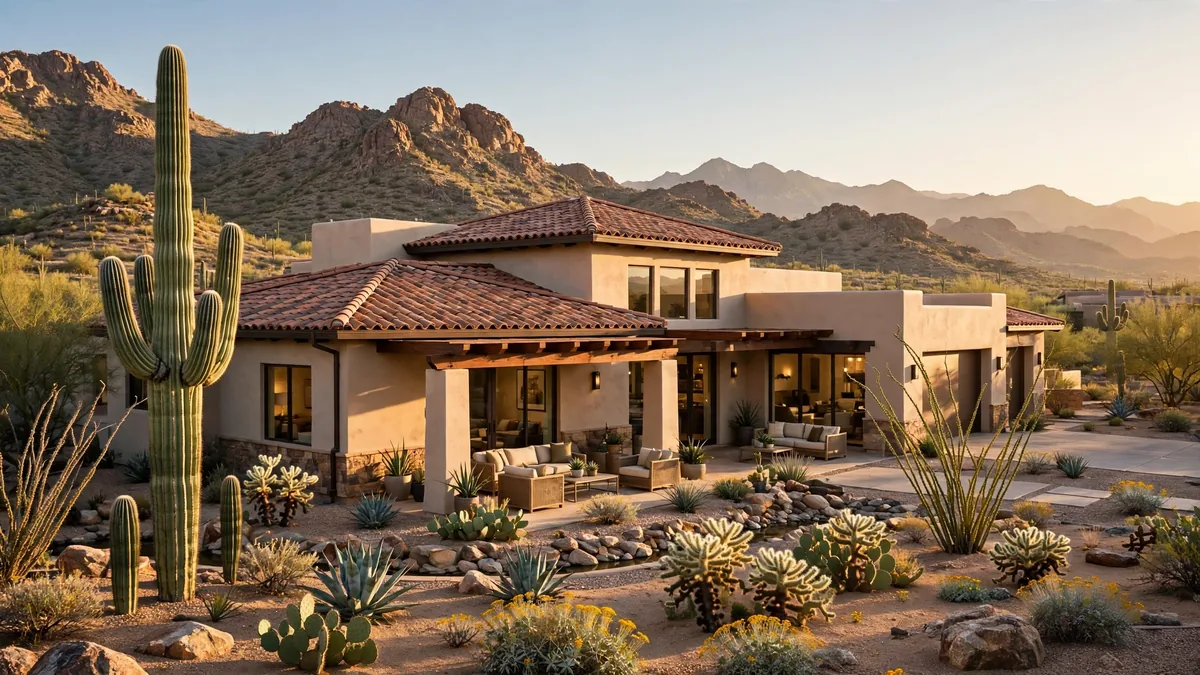
Scottsdale homeowners comparing a neighbor’s Phoenix quote to their own bids notice the gap immediately. It isn’t imaginary and it isn’t (only) a luxury tax — Scottsdale’s housing stock and rules genuinely produce more expensive roofs. Here’s the breakdown, with the one big lever that keeps most Scottsdale roofs out of the top price band.
What does roof replacement cost in Scottsdale?
| Scope / material | Typical Scottsdale range | Notes |
|---|---|---|
| Full replacement, typical home (2,000–2,500 sq ft basis) | ≈ $11,100–$23,500 | City-level published pricing (arizonaroofers data) |
| Phoenix equivalent for comparison | ≈ $11,800–$24,900 (same basis); Angi Phoenix average $8,856 | Basis differences explain the overlap |
| Clay tile, full replacement | $13–$18+/sq ft installed | Scottsdale’s architectural default |
| Concrete tile, full replacement | $10–$15/sq ft installed | Newer subdivisions |
| Underlayment replacement (lift & relay) | Scaled from ≈ $3,400 avg (Angi) | The job most Scottsdale tile roofs actually need |
| Foam section, new system | $5–$9/sq ft | Plus recoats every 5–10 years |
City ranges from published Arizona city-level roofing cost tables; Angi figures for Phoenix benchmarks.
Why Scottsdale roofs cost more: the four drivers
1. Clay, clay everywhere. Scottsdale’s signature look — barrel and flat clay profiles in desert tones — is the priciest mainstream tile. Clay runs above concrete per square foot and demands more careful handling.
2. Bigger, more complex homes. Larger footprints, more valleys, more elevation changes, courtyard and patio roof sections in mixed materials (tile pitched + foam flat is the classic Scottsdale combination). Complexity is labor, and labor is half the bill.
3. HOA and design review. Community guidelines pin down material, profile and color, which removes the cheap substitutions — and adds review timelines. Budget the approval step into your schedule; a rejected profile after installation is the most expensive outcome in this article.
4. Matching standards on repairs. In a community where roofs are a visible design element, a lift-and-relay with mismatched salvage tile gets noticed (and sometimes cited). Good Scottsdale roofers carry salvage relationships for discontinued premium profiles; that inventory costs money and shows up in bids.
The Scottsdale lever: underlayment, not replacement
The Phoenix logic applies with extra force here: an expensive clay tile field is the last thing to throw away. Scottsdale’s 1990s–2000s build-out (Grayhawk, McDowell Mountain Ranch, DC Ranch) is squarely in the 20–25-year underlayment window, and the correct job on a sound clay roof is the same lift-and-relay underlayment replacement — scaled to Scottsdale roof sizes, typically landing well below full replacement while resetting the waterproofing for 30–40 years with a premium membrane (compare specs in the tile underlayment guide). Replace the full tile only when the clay itself is failing or the profile can’t be matched — the full analysis is in our tile replacement cost guide.
Budgeting a Scottsdale roof project
- Get the HOA answer first. Profile and color approval in writing before the contract.
- Price underlayment-only and full replacement side by side from the same roofer; the comparison usually makes the decision.
- Ask about tile salvage explicitly. Your removed clay has value — either relaid on your roof or credited. Silence on this line favors the bidder.
- Plan around monsoon. Scottsdale’s re-roof sweet spots are the same dry windows as Phoenix; see the pre-monsoon checklist for timing.
- Compare against the statewide picture in our Arizona roof cost guide and the Phoenix pillar — a Scottsdale bid should be explainable against both.
And the standing rule for any five-figure roof decision: verify the ROC license at roc.az.gov, get the membrane named in writing, and ask the hiring questions before the deposit. Scottsdale money deserves Scottsdale-level paperwork.
Scottsdale by neighborhood: what dominates where
The city’s roofing map follows its building eras. South Scottsdale and the older central areas carry the most variety — mid-century ranch homes with shingle or foam/patio combinations, where replacement economics look most like Phoenix’s. Central Scottsdale (McCormick Ranch, Gainey Ranch era) is classic clay-tile territory with many roofs already through one underlayment cycle — ask sellers for the paperwork, because a documented 2015 underlayment job is a different asset than an original 1998 one. North Scottsdale (Grayhawk, DC Ranch, Troon) skews newer, larger and concrete/clay tile, now entering the first underlayment window — and its master-planned design review is the strictest in the city. One city, three different roof conversations; a Scottsdale bid should read like it knows which one your house is in.
Getting bids in Scottsdale without overpaying
The Scottsdale premium is real but negotiable at the margins. Use the dry-season calendar (winter bids meet open schedules citywide). Present the same written scope to three licensed roofers — ideally a mix of Scottsdale-based firms and Valley firms that work the city regularly; the second group often prices the same spec keener. Ask explicitly where their number sits against the city ranges in this guide and the statewide benchmarks — a contractor who can explain their delta (profile, membrane spec, HOA requirements, salvage) is showing you the bid is built, not padded. And sequence the HOA approval before the contract, not after: in Scottsdale, the most expensive roofing sentence is “we already ordered the tile.”
How the Scottsdale permit and design-review process actually runs
Replacement in Scottsdale usually moves through two approvals, not one, and the order matters. The community design review comes first: you (or your roofer, acting for you) submit the tile profile, manufacturer, and color to the HOA’s architectural committee and wait for a written approval before materials are ordered. Only then does the contractor pull the City of Scottsdale re-roofing permit and schedule the work. Reversing that order — permit pulled, tile delivered, design review still pending — is how homeowners end up paying restocking fees or, in the worst case, removing an unapproved profile that is already on the roof.
Build the review time into your calendar rather than treating it as a delay. While approval is pending, use the window productively: confirm the underlayment product by name, get the deck-repair price per sheet in writing, and settle how removed tile will be handled. A project that starts the day both approvals are in hand runs straight through; one that starts on a verbal “the HOA always approves this color” can stall with the roof open.
A worked example: pricing a 2,400 sq ft Scottsdale tile home
Take a typical north Scottsdale two-story with about 2,400 sq ft of roof area, sound clay tile, and original underlayment now past 20 years. Priced three ways from the ranges in this guide, the same house produces three very different projects:
- Underlayment replacement (lift and relay): the membrane job scaled up from the ≈$3,400 Angi average for Scottsdale roof sizes — the lowest total by a wide margin, because the clay field you already own goes back on.
- Full concrete tile replacement: at $10–$15 per sq ft installed, roughly $24,000–$36,000 — a real option only if you are also changing the roof’s look, since the existing clay is worth more than new concrete.
- Full clay tile replacement: at $13–$18+ per sq ft installed, roughly $31,000–$43,000+ — justified when the clay itself is eroded, brittle, or too broken to relay.
Read the spread as a decision tool, not a price list. If two bids for the same scope differ by thousands, the difference usually sits in membrane spec, flashing scope, or salvage handling — ask which. If bids differ because the scopes differ, you are not looking at a pricing problem at all; you are looking at two different jobs, and the cheaper-sounding one may simply have left the failing layer in place.
Where Scottsdale projects go wrong
Three failure patterns repeat. First, starting in monsoon season (June 15–September 30) without a dry-in plan: a tile tear-off exposes the deck slope by slope, and your contract should state how the roof is sealed each night and what happens if a storm cell arrives mid-job. Second, mixing systems without sequencing them — on the classic Scottsdale tile-plus-foam house, the foam section and the tile section meet at transitions that belong to one crew’s scope, in writing, or each contractor blames the other when that joint leaks. Third, treating the permit as paperwork: the permit record is what documents the membrane and the date for insurance and for the next buyer, so confirm the final inspection is closed out, not just the permit pulled, before the last payment clears. For the decision framework behind all three, work through the signs a roof is at end of life before you sign anything.
How we publish costs: every figure on this page is a range compiled from named third-party sources credited in the text (Angi, HomeAdvisor, the National Weather Service, the Arizona Registrar of Contractors and roofing-material references) — never a quote. Roofing prices move with material costs, roof size and access; the only number that matters for your house is a written bid from a licensed roofer.
Frequently asked questions
Why does a roof cost more in Scottsdale than in Phoenix?
Four compounding reasons: homes are larger on average (more squares of roof), clay tile — the expensive end of tile — is the architectural default, historic and HOA design reviews can dictate profiles and colors (and reject cheap substitutions), and salvage tile matching on older premium homes costs more. Labor rates for established, licensed Scottsdale roofers also sit at the top of the Valley range.
How much is a tile roof replacement in Scottsdale?
At the standard $10–$18 per sq ft installed for full tile replacement, a 2,500 sq ft roof area lands roughly $25,000–$45,000 depending on clay vs concrete, profile and complexity. The saving grace is the same as in Phoenix: most Scottsdale tile roofs need underlayment replacement only — an average of about $3,400 (Angi) scaled up by roof size — because the clay tile itself is still sound.
Does my Scottsdale HOA have to approve a new roof?
Very often, yes — planned communities across Scottsdale (DC Ranch, Grayhawk, McDowell Mountain Ranch, and the Desert Ridge area on the Phoenix side) regulate roof material, profile and color. Submit the architectural review before signing a roofing contract; replacing clay with a non-approved profile can result in a tear-off order. Your roofer should know the community's guidelines, but the approval letter is the homeowner's responsibility.
Are foam roofs common in Scottsdale?
Yes — on flat and low-slope sections, patio roofs and modern/Southwest designs, foam (SPF) is everywhere in Scottsdale, often paired with tile on the pitched sections. A foam section's economics are different: installation runs $5–$9 per sq ft and recoats every 5–10 years keep the system alive for decades. See our foam cost guide for the full maintenance math.
Is roof work in Scottsdale permitted through the City of Scottsdale?
Yes — re-roofing requires a City of Scottsdale permit in most cases, pulled by your contractor, with the same logic as Phoenix: the permit record documents the work for insurance and resale. Scottsdale also enforces its building codes on underlayment specifications; a bid that proposes skipping the permit is disqualifying.