Roof Replacement Cost in Arizona: 2026 City Ranges
Arizona is really two roofing states stacked on top of each other: the low desert (Phoenix, Tucson, Yuma), where tile, foam and heat define everything, and the high country (Flagstaff, Prescott, Payson, the White Mountains), where snow and freeze do. This statewide guide organizes costs by both geography and roof type, anchored on Phoenix — the market with the best published data.
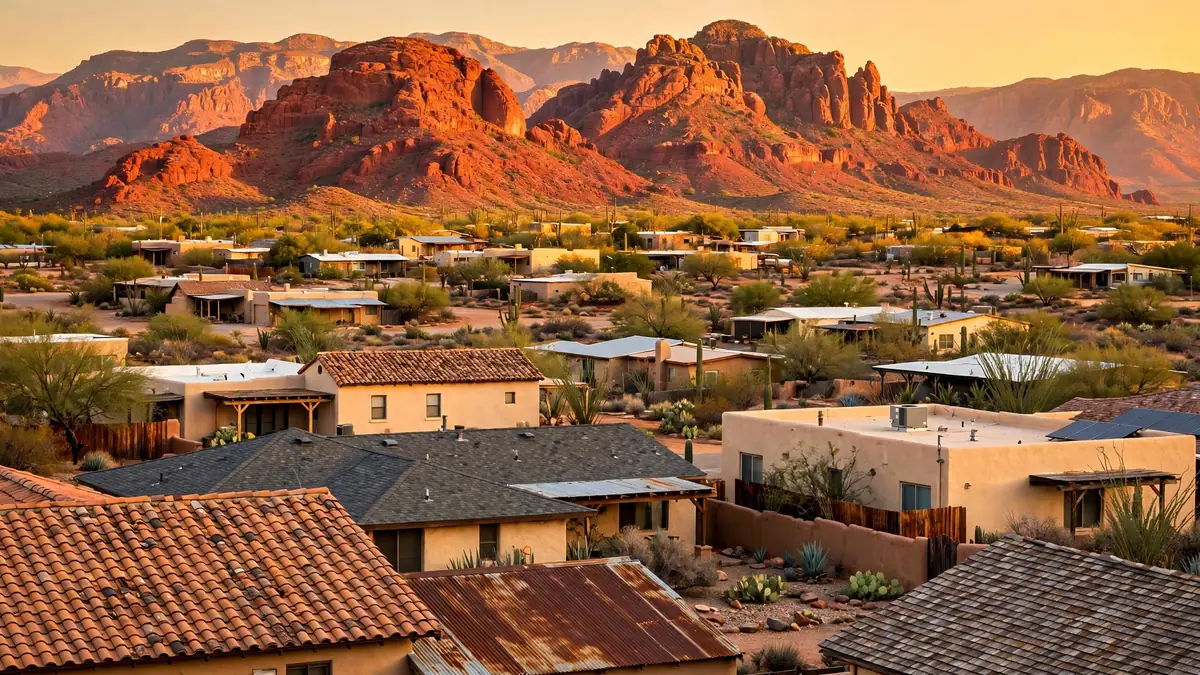
Arizona is really two roofing states stacked on top of each other: the low desert (Phoenix, Tucson, Yuma), where tile, foam and heat define everything, and the high country (Flagstaff, Prescott, Payson, the White Mountains), where snow and freeze do. This statewide guide organizes costs by both geography and roof type, anchored on Phoenix — the market with the best published data.
Arizona roof replacement costs at a glance
| Market | Typical full replacement | Market character |
|---|---|---|
| Phoenix (Angi average) | $8,856 avg; $6,273–$11,694 typical; $4–$11/sq ft | Benchmark market; tile + shingle + foam |
| Scottsdale | ≈ $11,100–$23,500 (typical homes basis) | Clay tile + HOA premium |
| Mesa / Gilbert / Chandler | Near Phoenix ranges | Tile-heavy newer suburbs; underlayment-cycle work booming |
| Tucson | At/slightly below Phoenix | Foam and flat roofs dominate |
| Yuma / Lake Havasu | Phoenix-like pricing, thinner contractor supply | Extreme heat; scheduling is the constraint |
| Flagstaff / Prescott / high country | Comparable per-sq-ft, different spec | Snow load, metal/architectural shingle, ice shield |
The roof-type split matters more than the city
Desert tile systems (Phoenix, Scottsdale, Tucson’s foothills): full replacement $10–$18/sq ft, but the defining statewide job is underlayment replacement at an average of ≈ $3,400 (Angi) — because tile outlives its membrane two-to-one. Budget by the tile lifespan logic, not by replacement panic.
Shingle (everywhere, dominant in the high country and older desert neighborhoods): Phoenix benchmarks put most jobs near $10,847 within a $7,748–$24,792 span (Angi), at roughly $2–$7/sq ft. Arizona-specific catch: desert shingles live 15–20 years against 25–30 nationally — the full explanation and numbers are in our shingle cost guide.
Foam/flat (Tucson especially, plus desert patio and commercial roofs): new systems $5–$9/sq ft, with recoats every 5–10 years as the system’s true rhythm; see the foam cost guide.
Metal (high country standard, desert accent roofs): 40–60-year life, premium installed price, priced per project. Snow country justifies it fastest; desert owners buy it for lifespan and solar-heat reflection.
Desert vs high country: what actually changes in the bid
- Underlayment spec. Desert tile roofs spend their budget on heat-rated membranes. High-country roofs spend it on ice-and-water shield at eaves and valleys. Same line item, different product.
- Ventilation. Desert attics cook; ridge/attic ventilation upgrades appear in Phoenix bids as longevity insurance for the roof system. In snow country, ventilation is about ice dams.
- Season windows. The desert replaces roofs year-round (with monsoon pauses); the high country has a firm construction season, and a leaking roof in a Flagstaff January is an emergency-priced problem.
- Labor markets. Phoenix and Tucson have deep, competitive roofer benches — three comparable bids are easy. Rural and mountain markets have fewer licensed contractors; verify ROC status carefully and expect travel premiums in bids.
How to use this guide
If you’re in the Valley, go deeper with the Phoenix pillar guide and the Scottsdale page. Everywhere in Arizona, normalize any bid the same way before comparing: price per square foot installed, named underlayment spec, tear-off and disposal included or not, flashing included or not, permit included or not, and workmanship warranty in years. A bid that survives that normalization is comparable from Yuma to Flagstaff — and one that refuses it isn’t a bargain anywhere in the state. Round out the decision with the maintenance calendar and warranty guide, and verify any roofer’s license with the Arizona Registrar of Contractors before money moves.
The Arizona cost lines out-of-state guides forget
National cost guides mislead Arizona owners in specific, predictable places. Disposal weight: a tile tear-off moves several tons of material; desert disposal lines are real money that mild-climate shingle guides understate. Heat-rated specification: high-temperature underlayment and ice-and-water shield are different products bought for opposite reasons — an Arizona bid specifying the northern product (or a northern bid missing the Phoenix one) reveals a contractor working from the wrong climate. Monsoon scheduling risk: desert bids carry weather-contingency logic that doesn’t exist in dry-climate markets; a bid with no storm-pause terms is a bid that hasn’t thought about July. Solar coordination: with Arizona’s solar penetration, tear-off-and-replace increasingly includes panel removal/reinstallation coordination — priced separately, scheduled jointly, and a common source of “the quote didn’t include that” disputes. Normalize for these four lines and cross-state comparisons become honest.
A homeowner’s statewide rule of thumb
If you remember one framework from this page: price = (roof area × the material’s installed rate) adjusted by tear-off, deck condition and spec quality — and verify the spec before you compare the price. That formula holds in Phoenix, Tucson and Flagstaff alike; only the rates, the specs and the seasons change. The Phoenix benchmarks are your anchor because they’re the best-documented (pillar guide); treat any statewide bid that can’t explain its distance from them as unfinished work, whoever wrote it.
What does the same house cost in Phoenix, Tucson, and the high country?
Imagine the same basic job in three places: a single-story home, a straightforward roof area, no hidden deck damage. In Phoenix, start with the benchmark published for the city — $4–$11 per square foot installed, an $8,856 average from Angi, and a typical range of $6,273–$11,694. That anchor is useful because it forces every other bid to explain itself. In Tucson, a comparable bid tends to land at or slightly below Phoenix, mostly on labor, but the comparison only holds if the roof type matches. A Tucson foam or flat roof is not cheaper or more expensive than a Phoenix tile roof in any meaningful sense; they are different systems, with foam carrying its own new-system range of $5–$9 per square foot and recoats every 5–10 years.
In Flagstaff, Prescott, or the White Mountains, the per-square-foot conversation changes because the specification changes. The bid has to build for snow load and freeze, not for a roof surface passing 160°F. Expect steeper pitches, ice-and-water shield at vulnerable edges and valleys, and metal or architectural shingle where desert tile and foam are rare. Travel, access, and a shorter building season can also move the total even when the headline rate looks familiar. The mistake to avoid is importing a Phoenix number into a mountain specification, or the reverse. Normalize each bid the same way — area, material, tear-off, flashing, underlayment or ice shield, permit, and workmanship warranty — and then let the climate zone explain the difference.
How should second-home and rental owners budget differently across Arizona?
A roof you live under gives you early warnings: a stain after a storm, granules at a downspout, a tile in the yard. A second home in the high country or a rental in Tucson may sit unvisited while a small failure keeps working. That changes the budgeting logic, not just the maintenance schedule. For an absentee-owned property, build the replacement date from records rather than symptoms. A desert shingle roof should already be in the capital plan inside its 15–20-year Arizona life. A tile roof should be budgeted around its underlayment cycle — the tile can last 50+ years, but felt underlayment reaches its decision point at 20–25 years, and the statewide average underlayment job published here is about $3,400. A foam roof should be budgeted around recoats every 5–10 years, because missing that cycle is how a manageable recoat becomes a larger system job.
Distance also changes who you hire and when. In Phoenix and Tucson, getting three comparable bids from licensed contractors is realistic. In thinner markets — Yuma, Lake Havasu, and smaller mountain communities — scheduling lead time and contractor supply may matter more than squeezing the last dollar from the rate. Book inspections and planned work well before the season that stresses that region: monsoon, June 15 to September 30 on the National Weather Service calendar, in the desert, and winter weather in the high country. Verify the license with the Arizona Registrar of Contractors before any deposit, and keep the contract, product names, and dated photos with the property file, not in a drawer at the house. When you cannot walk the roof yourself, that paperwork is how you know what you bought — a useful starting point is the statewide comparison in the Phoenix replacement guide and the upkeep rhythm in the maintenance guide.
How we publish costs: every figure on this page is a range compiled from named third-party sources credited in the text (Angi, HomeAdvisor, the National Weather Service, the Arizona Registrar of Contractors and roofing-material references) — never a quote. Roofing prices move with material costs, roof size and access; the only number that matters for your house is a written bid from a licensed roofer.
Frequently asked questions
What is the average cost of a roof replacement in Arizona?
Using Phoenix as the benchmark (the state's largest market), Angi puts the average at $8,856 with $4–$11 per sq ft installed and a typical span of $6,273–$11,694. Statewide, most full replacements land between roughly $7,000 and $15,000 for shingle on average homes, while full tile replacement in the desert cities runs $18,000–$35,000+. Always normalize by material and roof area before comparing cities.
Is roofing cheaper in Tucson than Phoenix?
Generally a little, on labor — Tucson's market rates sit modestly below the Valley's, and its housing stock skews to foam and flat roofs whose economics differ from tile. Materials are commodity-priced statewide. Expect Tucson bids roughly in line with or slightly under comparable Phoenix bids, with the same per-square-foot bands applying.
How do northern Arizona roofs differ in cost?
Flagstaff, Prescott and the White Mountains build for snow load and freeze: metal and architectural shingle dominate, pitches are steeper, ice-and-water shield is standard, and access/logistics in mountain towns add cost. Tile and foam — desert systems — are rare up there for good reasons. Per-square-foot prices are comparable, but the specification (and therefore the bid structure) is a different document.
Do Arizona roof prices change by season?
Bids themselves are fairly stable, but availability isn't: the pre-monsoon rush (May–June) and post-storm weeks strain every desert contractor's calendar, while winter is the Valley's most flexible scheduling season for planned work. Northern Arizona flips the pattern — winter weather closes roofing windows entirely. A planned replacement in a market's calm season reliably beats an emergency purchase in its storm season.
Are permits required for roof replacement across Arizona?
In incorporated cities and towns, generally yes for re-roofing — Phoenix's permit runs about $222 on an average job (Angi), and other municipalities set their own fees. Unincorporated county areas vary. Your contractor should pull the permit wherever required; the permit record is also documentation your insurer and a future buyer will ask for.