Roof Replacement Cost in Phoenix, AZ (2026 Pillar Guide)
This is the master guide to what a new roof costs in Phoenix in 2026 — the numbers, the breakdown, and the links out to every material-specific guide. Everything here is built from named sources (Angi's Phoenix cost data, regional contractor pricing references) and stated as ranges, because any roofer who gives you an exact price without measuring your roof is guessing with your money.
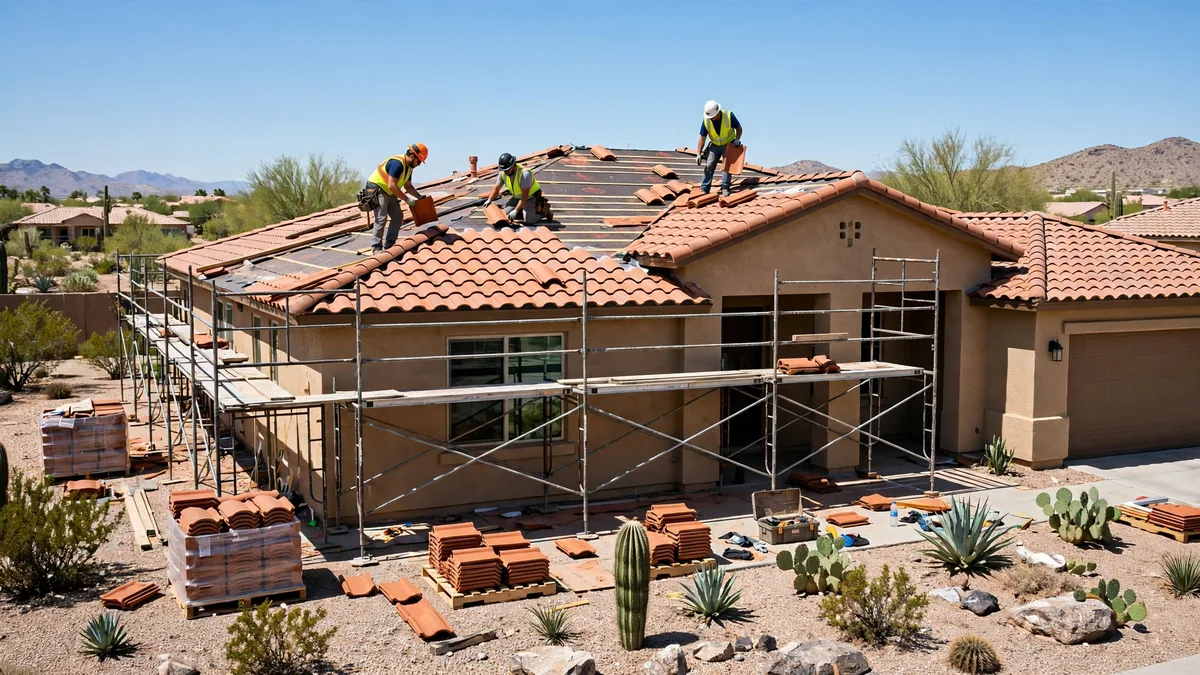
This is the master guide to what a new roof costs in Phoenix in 2026 — the numbers, the breakdown, and the links out to every material-specific guide. Everything here is built from named sources (Angi’s Phoenix cost data, regional contractor pricing references) and stated as ranges, because any roofer who gives you an exact price without measuring your roof is guessing with your money.
How much does a roof replacement cost in Phoenix?
| Material (installed) | Per sq ft | Typical Phoenix total* | Service life in AZ |
|---|---|---|---|
| Asphalt shingle | ~$2–$7 (city avg within this band) | ~$7,748–$24,792; most ≈ $10,847 (Angi) | 15–20 years |
| Concrete/clay tile (full replacement) | $10–$18 | Commonly $18,000–$35,000+ | 50+ years (tile); underlayment cycles at 20–25 |
| Tile underlayment only (lift & relay) | ≈ $4.20–$4.75 | ≈ $2,000–$5,500 typical; avg ≈ $3,400 (Angi) | 20–40 years by membrane |
| Foam (SPF) new system | $5–$9 | ≈ $6,300 for a 1,200 sq ft roof (AZ avg ≈ $5.50/sq ft) | 20–25+ years with recoats |
| Metal | Higher; project-priced | Varies widely by profile | 40–60 years |
| Phoenix average, all materials (Angi) | $4–$11 (avg ≈ $4.50) | $6,273–$11,694 typical; avg $8,856 | — |
*Totals vary with roof area (not floor area), pitch, tear-off and deck condition.
Angi’s Phoenix dataset — the most-cited benchmark for the city — centers a replacement at $8,856, with the realistic spread running from about $1,400 (small partial-scope jobs) to $42,753 at the extremes. Treat the average as the shingle-weighted center of the market; tile-heavy north Phoenix and Scottsdale skew above it, as the city-by-city comparison below shows.
Where does the money go?
On an average Phoenix job, labor is 50–60% of the bill — Angi estimates $4,400–$5,300 of labor inside the average replacement. The rest: materials (the roofing system itself), tear-off and disposal of the old roof, underlayment and flashing, and the City of Phoenix permit (~$222 at the average job size). Two line items are chronically under-bid and then “discovered”: deck repair (priced per sheet of plywood once the old roof is off) and salvage/replacement tile on tile jobs. A bid that prices both in advance is the professional one.
What changes the price in Phoenix specifically?
- The underlayment spec. Under tile, the membrane is the roof’s waterproofing, and specs range from one layer of felt to high-temperature modified bitumen — a 2–3x lifespan difference priced at a few dollars per square foot. Full treatment in tile underlayment replacement cost.
- Heat scheduling. Summer work means dawn starts and shorter effective days; monsoon season adds weather delays. Neither should change a fair bid, but they change the calendar.
- Tile salvage reality. Full tile replacement discards your most valuable component. Unless the tile itself is failing, underlayment replacement delivers the waterproofing of a new tile roof at a third to half the price.
- City and HOA. Scottsdale money differs from Phoenix money — HOA design reviews, clay-heavy architecture and lot sizes push Scottsdale roof costs above the Phoenix average.
Homeowners in Desert Ridge, where most 1995–2010 tile roofs are reaching the underlayment window together, can compare the lift-and-relay option against full replacement using the Desert Ridge companies guide, which covers the local job and the roofers who serve the neighborhood.
The material guides (read the one that matches your roof)
- Tile: full tile replacement cost in Phoenix — and when to choose underlayment-only instead.
- Shingle: shingle roof replacement cost in Arizona — including why AZ shingles live 15–20 years, not 30.
- Foam/flat: foam roof cost in Phoenix — new systems, recoats, and the maintenance math.
- Repairs instead: roof repair cost in Phoenix — the $175–$3,075 band most problems actually live in.
- Before you commit: roof inspection cost (avg ≈ $365) and the statewide Arizona cost guide for outside-the-Valley pricing.
How to get three bids that are actually comparable
Send every roofer the same scope in writing: tear-off included, underlayment named by product, flashing replaced (not reused), deck repair priced per sheet, permit pulled, disposal included, workmanship warranty stated in years. Bids built on the same scope land within 10–20% of each other; bids built on vibes land anywhere. Then verify the ROC license at roc.az.gov and interview with our questions to ask a Phoenix roofer. Finally, read the warranty guide before signing — the cheapest bid with a 2-year workmanship warranty is rarely the cheapest roof.
One last calibration: the average Phoenix replacement at $8,856 works out to roughly $37 a month across a 20-year service life. Shopping that decision on the last $500 of bid is how homeowners end up buying the job twice.
Replacement and solar: sequence them once, correctly
A third of Phoenix roof conversations now include solar panels, and the sequencing mistake is expensive: panels mounted over a roof with five years of life means paying to remove and reinstall the array at re-roof time. The correct order is roof first (or at least confirm, with an inspector’s number, that the roof layer outlasts the array’s financing horizon), panels second — with the roofer and solar installer coordinating mounts and warranties in writing (the warranty guide covers the paperwork traps). If your roof is mid-life and sound, get that assessment documented before the solar contract, not after the installation truck arrives.
How owners actually pay for a Phoenix roof
Five-figure roofs get financed in a handful of ordinary ways: home-equity lines (the cheapest money for most owners), contractor-arranged financing (convenient, priced higher, read the term sheet like a bid), and — for the planned jobs this site keeps advocating — plain saving against a known date. The strategic point is that planned replacement borrows on your schedule at calm-season prices, while emergency replacement borrows at storm-season prices under time pressure. The calendar is a financial instrument: knowing your underlayment date or your shingle roof’s 15–20-year window years ahead is worth more than any financing product sold at a kitchen table in August.
How do you sanity-check a Phoenix bid with the per-square-foot math?
Before you compare two totals, run each bid through the same simple check. First, confirm the roof area the roofer measured — not your home’s floor area, because pitch and overhangs make the roof larger. Second, divide the total price by that roof area. A full replacement that lands inside Angi’s Phoenix band of $4–$11 per square foot installed is at least in the expected market range; the average job works out to roughly $4.50 per square foot. Third, ask which end of the band the specification explains. A shingle job pricing near the low end should still name its underlayment, tear-off, flashing, disposal, and permit. A tile job will sit higher — full tile replacement is published here at $10–$18 per square foot — so a tile total that looks like a shingle total deserves a scope question, not immediate celebration.
Work the example in reverse, too. If a 1,800-square-foot roof area is quoted at the Phoenix average rate, the arithmetic points to roughly $8,100, close to Angi’s $8,856 city average and inside the typical $6,273–$11,694 range. That does not prove a bid at that level is good, and a higher bid is not automatically wrong. It gives you the right follow-up questions: Is deck repair priced separately per sheet? Is tile being salvaged and relayed, or fully replaced? Is ventilation work included? A bid that can explain its distance from the average, line by line, is far safer than a bid that simply matches it.
When is waiting the more expensive choice in Phoenix?
A sound roof can wait for a calmer season and a planned budget. A roof at the end of its layer’s life often cannot wait without changing the job. On a shingle roof in its late teens, another summer of heat past 160°F on the surface can turn a planned tear-off into deck damage underneath. On a tile roof, the tile may still look sound while the underlayment has reached its 20–25-year cycle; waiting through another monsoon season, June 15 to September 30 by the National Weather Service calendar, risks valley and wall-joint leaks that add interior and deck repairs to what could have been an underlayment replacement alone.
The decision rule is condition, not the calendar alone. If an inspection finds a local failure on a sound system, repair it and keep planning. If it finds the failing layer failing across slopes, price the planned job for winter or spring rather than gambling on one more monsoon. Emergency timing rarely improves either the price or the choice of contractor.
How we publish costs: every figure on this page is a range compiled from named third-party sources credited in the text (Angi, HomeAdvisor, the National Weather Service, the Arizona Registrar of Contractors and roofing-material references) — never a quote. Roofing prices move with material costs, roof size and access; the only number that matters for your house is a written bid from a licensed roofer.
Frequently asked questions
How much does a new roof cost for a 2,000 sq ft house in Phoenix?
Using Angi's Phoenix figures ($4–$11 per sq ft installed, ~$4.50 average), a 2,000 sq ft roof area in asphalt shingles lands roughly in the $7,000–$11,000 band; concrete tile typically runs $10–$18 per sq ft installed, so $18,000–$30,000+ for full tile replacement. Remember roof area exceeds floor area (pitch and overhangs), and most Phoenix tile homes can instead do underlayment replacement at a third to half of full tile cost.
Why are Phoenix roof quotes so far apart?
Usually scope, not greed: one bid includes tear-off, new underlayment spec, flashing and permit; another assumes things. Compare the underlayment named, tear-off and disposal lines, flashing replacement, deck-repair pricing per sheet, and warranty terms. A bid $3,000 lower that reuses old flashing and one layer of cheap felt is not the same roof. Our bid-comparison questions are in the hiring guide.
Does a new roof need a permit in Phoenix?
Re-roofing in the City of Phoenix generally requires a permit; Angi's Phoenix data puts the permit at about $222 on an average job. Your roofing contractor should pull it — if a bidder suggests skipping the permit to save money, that's a red flag about everything else they'll skip. Final inspection and the permit record also protect resale value.
How long does a full roof replacement take in Phoenix?
Most single-family replacements take 2–5 days depending on material and size: shingles are fastest (often 1–3 days), tile the slowest because every piece is handled individually. Summer scheduling matters — crews start at dawn in July/August, and monsoon-season work may pause for storms, which is one reason spring and fall are the Valley's re-roof seasons.
Will a new roof raise my home's value in Phoenix?
A documented new roof removes one of the biggest objections in a Phoenix sale and can decide whether a buyer (and their insurer) is comfortable at all — insurers increasingly scrutinize roof age in Arizona. It rarely returns 100% of cost as appraised value, but a roof at end-of-life routinely costs more than its replacement price in negotiated concessions, inspection delays and insurance friction.